
Amer Zafar Durrani, President, Reenergia and Komal Kenneth Shakeel, Senior Economist, Reenergia
We wrote about household solar and its adoption in Pakistan last year and since, many a storm has erupted on the local landscape on this issue coupled with net metering. Net metering is a typical policy area where countries like Pakistan are best served to wait till all research has been done in the local context and a public consensus built around the pros and cons. Pakistani government, like it did in the case of IPPs went headlong without the pre-requisite policy research, debate, and consensus building to implement net-metering. Immediate ‘wins’ were celebrated.
The fundamental issue being ignored is the experience since this being introduced in USA in the 1980s showed that the net metering required countries to be open to the public and to themselves about how they will balance the two core variables of ensuring energy equity and maintaining grid stability—requiring dynamic and localized policies rather than a single brush country wide application, like Pakistan does from GB and Chitral to Tharparkar and Gwadar. When power corridors of a country live in a small village across its border, called Islamabad, this happens often.
Generally, net metering policy allows households (and others) drawing electricity from a centralized grid through the local energy supply company (ESCO) and producing their own renewables-based electricity to sell the excess electricity back to grid thereby reducing their electricity bills. This was first introduced in Minnesota in the USA in 1983, and since started being viewed as a local panacea for reducing the weight on consumers’ wallets. This bubble started bursting within a few decades as widespread utilization gained favor . The fact was that only the relatively rich had money to become independent power producers based on renewable technologies, and the many power plants supplying the central grid needed payment for their operations and production or the plants would shut down. In fact, the reason why net metering was invented was precisely why the plants could not shut down.
Electricity once generated, and without storage, must be used or gets wasted. Initially policy makers saw the excess household energy to cater to an ever-growing demand for electricity by allowing excess ‘clean’ electricity from households (and others) to enter the central grid. Multiple issues followed. As localized energy from households grew the grid wanted to buy less from the power plants. The power plants could not produce as they had been installed for being efficient producers at certain capacities and without regular payments, they could not keep up operations. I am sure you will start seeing the mess being created. There were issues with keeping the central grid stable with multiple producers sending to and drawing electricity from it—though Pakistan never entirely got there.
Pakistan was already reeling from our so called “Power Sector Debt” also famously called the “Circular Debt,” when this policy was introduced, not realizing that with the state of the sector the mess would be amplified if this policy was adopted across the board. This is where we stand today.
All this has happened without the Pakistani policy makers realizing that many a country around the world have been reconsidering net metering policies for the following reasons, including the USA. Households (and organizations) with low-incomes cannot afford their own electricity nor participate in net metering schemes—voiding governments’ primary responsibility is to uphold equity. Grid stability is difficult to maintain with so many folks trading and even the most modern of grids struggle at some point. The electricity generators, the IPPs, are not running systems that can be turned on and off within days and need to maintain generation fuels’ supplies—all requiring healthy cash flow. They cannot even be told to shut down as the renewable sources of energy cannot maintain a twenty-hour load profile specific supply without storage and or IPPs supplying to the grid.
From USA to Africa to Australia, countries are looking at agile policy making and dealing with net metering on a localized level instead of single brush policies applicable to deal with the issues arising from haphazardly implemented net metering policies. Policies can include developing localized polycentric solutions such as richer local producers (households and others) supplying excess back to localized grids serving the proximate poorer households (and other users); earning social service and impact points from the government. No matter what policies are being adopted, household net metering is no longer the ‘darling’ of any government or policy maker and measures are being adopted to ensure equity and grid stability.
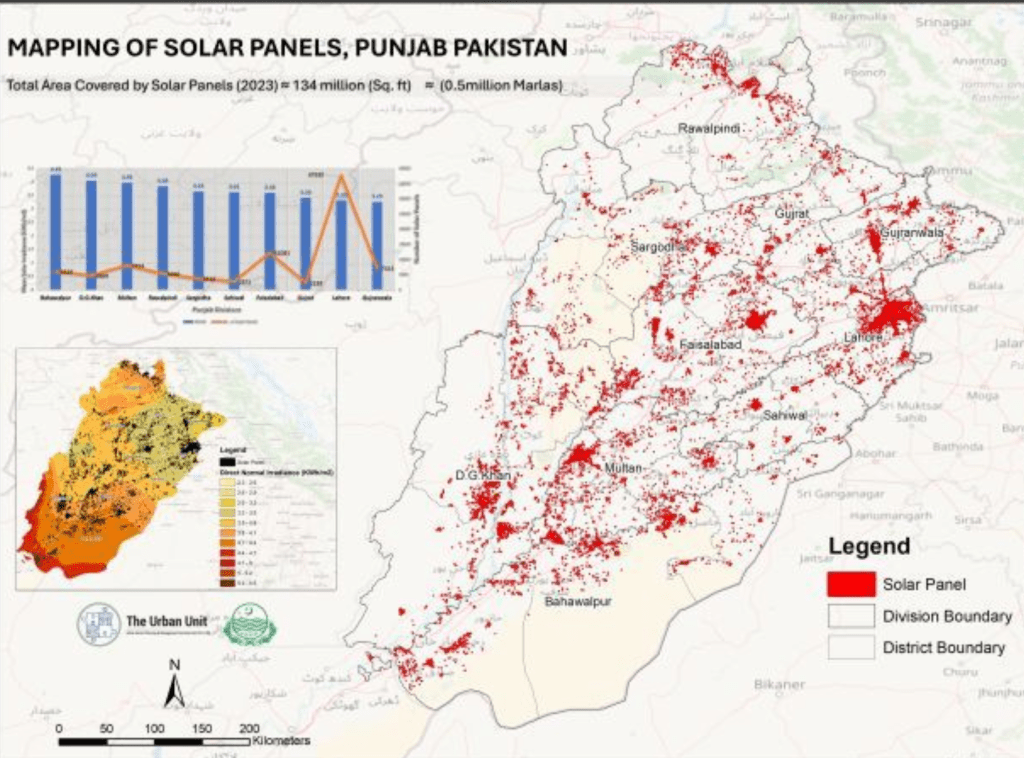
For Pakistan the challenge is amplified as the contracts with central IPPs are already a burden on the masses. In such a situation, there is a need for such policies on electricity to be shifted to provincial and local levels (when we have these officially) with careful planning at ESCOs’ level to ensure a win at each location. Hence it is not simply a matter of saying we have 6,000 MW of self-generated renewable electricity available, rather ask where they are concentrated. Otherwise, this elite lobby will force itself on the broader policy making agenda of the Pakistani government, subverting the lesser privileged.
May 14, 2024, Islamabad, Pakistan
This article was first carried by The News in Pakistan, https://www.thenews.com.pk/print/1189821-net-metering-fallout
 World through a Pakistani Lens