Tag: COVID-19

  • Pakistan’s COVID-19 Response: Pro-activity, Impact and Needs Assessment, and Using IT Proactively

    The Government of Pakistan should be carrying out a Covid-19 Impact and Needs Assessment (CINA), in accordance with the global practice. [https://empowerpakistanbyazd.blog/2020/03/27/pakistans-covid-19-response-and-the-international-financial-institutions-where-is-the-rapid-needs-assessment-and-a-national-action-plan/]

    The tool preferred for the required COVID-19 CINA in Pakistan is a Post Disaster Needs Assessment (PDNA) and Recovery and Peace Building Assessment (RPBA) hybrid, without delving into the tedious Damage and Loss Assessment (DALA). Essentially in this desired CINA, there should be three components: service delivery, social cohesion and economic impact.

    While some may rebut this idea, this can be an enormous management tool for the government during, and post crisis, and can be done by a dedicated team in parallel with the reactive measures that are being taken to manage the pandemic.

    In aid of developing this impact and needs assessment for Pakistan, we should opt for an off the shelf information technological analytical tool system that assists in the information gaps for COVID-19:

    a) ability to react in real time to media (both informed and disinformed and its ratio) based on a knowledge about the public understanding (and source of formation of the public understanding) of the disease and associated pandemic;

    b) general public’s preparedness for any potential longer-term societal disruptions;

    c) knowing how public perceive available health care and access the same;

    d) how is work being delivered from home and how is workforce being disrupted by the same;

    e) how are small and medium enterprises being disrupted;

    f) disruptions in the transports and logistics and essential services.

    This tool can then also be utilized to do real-time monitoring as follows.

    • Monitoring for compliance with stay-at-home and quarantine measures.
    • Monitoring to identify population flows to hospitals and pharmacies.
    • Monitoring of hospital infrastructure to understand staff readiness and hospitalization rates.
    • Forecasting of hotspots within urban zones as identifying latent areas for further monitoring due to population out-migration.
    • Developing of assistance (rations and cash) tracking system to integrate COVID-19 countrywide efforts.
    • Integrate monitoring and forecasting insights with assistance tracking system to facilitate actionable and agile decision-making.
    • To assist in COVID-19 related CINA.

    All this can be achieved by combining real-time data from social media, newspapers, and other digital public opinion streams with traditional survey data, by algorithms and geospatial analysis. One can integrate insights from social media analytics, Internet of Things data, financial transactions, and Human Movement data to assess both national and hyper-local social disruption associated with COVID-19.

    In summary, there is a dire need for setting up effective monitoring of quarantine compliance and local healthcare capacity coupled with actionable reporting and forecasting of disease hot-spots. The daily monitoring snapshots and forecasting outputs can be seamlessly integrated into an assistance monitoring system to support decision making.

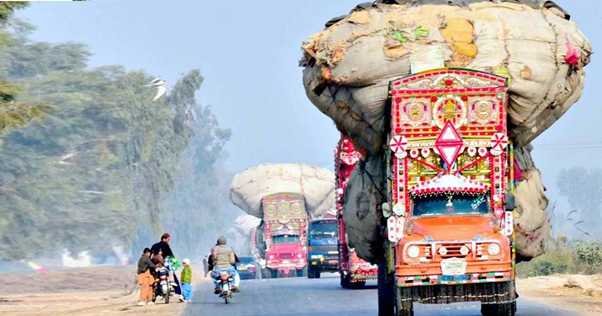
  • Pakistan’s COVID-19 Response: Logistics and Essential Services

    “..This train from Yiwu to Madrid, which is the longest rail line in the world, has been regularly running since 2014. It usually carries electronics, automobile components, and other goods, but from now until the crisis ends the company has made space available to any individuals or companies looking to make a donation to the COVID-19 relief efforts in Europe..” so reported Forbes a few days ago.

    Logistics and transport services are at the core of any pandemic response. So, why would Pakistan be thinking twice about this? To answer this, we need to look deeper and separate this into its four dimensions which will help understand the suggestions proffered later in this blog. The first obviously is passengers and goods, the second is across the border versus within the borders, the third one is the mode of transport—rail, road, air, and water, and the fourth one is the reliance on indirect supply and demand patterns for pricing. I will not focus much on another dimension which is intra and intercity, as we are basically discussing continuity of cross-Pakistan logistics and essential services.

    We will start with modes. Trains don’t usually jump tracks and neither to airplanes take multiple pitstops and chat with other airplanes along the way. Ships have ports of call and rather large crews barring very modern ones. Road traffic—trucks, buses, cars—has choices to do all the above. In fact, when dealing with aids, it is truckers we tackle as they not only are a source of carrying and transmitting and intervening, but their social ambivalence levels normally exceed average people. So be there wars or pandemics, the first choice for logistics and transport are trains and aircrafts. Pakistan unfortunately has very rudimentary railways’ capability and for us the choice for major within country movement falls on the road sector services. Air service and airport are also very easy to ‘contain’ and as such need revised SOPs during pandemics. In fact, restricting people travel to strictly rail or air in a contained manner is a preference in both war and pandemics.

    Within our borders, road transport and logistics followed by air and rail will have to be continued as essential services. Across borders, it is obvious that essential inputs to our economy (both finished and unfinished) must be continued and for this our ports need to be operational. Now’s not the time to focus on Gwadar rather it is time to concentrate on our two major ports, Qasim and Karachi. Air services can and will continue to pay the appropriate role followed to some extent by road sector in the case of our links with Afghanistan, Iran, and to a very small extent China. Ensuring continuity and in fact acceleration of Customs and related clearance services is required, to ensure that Goods Clearance times are brought to nought.

    Most important is to decide on who avails the continued essential transport and logistics services. The priority must be goods transport followed by security and medical. The many transport and logistics services serving transport of people need to rethink the business model on how they can stay relevant and survive. Transport of people is secondary given the nature of this pandemic and the country would serve well to regulate the same.

    This brings us to cost of services. Pakistan like other transport markets has its own peculiarities when it comes to how costs are estimated. Pakistan exports less than it imports, and it does so primarily through two seaports. This results in a directional imbalance in the availability of transport which impacts costs. This imbalance is compounded by the fact that the nature of our exports tends to be less cost dense which the imports tends to be more cost dense. Further, being a large agricultural country crop seasons impact availability further. In times such as now, these costs become further unpredictable.

    Be ready to reestablish ‘fair price’. I say this as otherwise continuity of services will be jeopardized. With approximately 200,000 trucks on the road and about a million plus employed directly in trucking, this is very much part of the daily wagers’ and almost- to actual- poor that government is talking about targeting.

    All this points to a COVID-19 response strategy for continuity of logistics and essential services as follows. A) Focus on continuity of goods transport. B) Focus on improving CONVID-19 awareness amongst the truckers in Pakistan. C) Revise the established government ‘rates’ at local, provincial and federal levels to above pre-CONVID-19 levels. D) Reduce harassment [primarily by provincial security agencies] of truckers providing these essential services along the roads. E) Request and recognize those people transporters who are willing to run essential ‘goods supply routes’ both inter- and intra-city. F) Decree Customs and clearance services to operate 24/7 at the seaports, in shifts. G) Develop and decree revised SOPs for ‘contained’ movement of people though air and rail.

  • Pakistan’s COVID-19 Response and the International Financial Institutions: Where is the Rapid Needs Assessment and a National Action Plan?

    In times of disaster, and we are in one, almost all nations opt for a national action plan to both react and to proactively prepare for relief, recovery, and restoration/rebuilding; often including building resilience post disaster. In global vernacular it is called DRM or Disaster Risk Management, also often Disaster Risk Mitigation and Management. Disasters often lead to or exacerbate existing fragilities and conflicts leading to localized or spreading violence. Pakistan has hitherto been well served by always timely preparing such disaster needs assessments and plans—not only for internal consumption but to manage external offers of assistance. Has Pakistan done so for the CONVID-19 pandemic at our hands? I provide here, some suggestions unless these actions have already been undertaken and the public has not been informed.

    On the Corona assessment, the govt can request the ADB, WB, EU and UN to do a joint assessment under the 2008 Protocol of Cooperation, or it can ask the Bank only (both options have pros and cons). This could be a simple letter to Bank from MOF, requesting for “support the Government of Pakistan in carrying out and Covid-19 Impact and Needs Assessment (CINA), in accordance with the global EU-UN-WB PDNA/DALA methodology. PDNA is Post Disaster Needs Assessment and DALA is Damage and Loss Assessment (which is a sub-tool of PDNA used by EU, UN and WB).

    However, this is more complex that a PDNA. In FCV situations, the tool that comes closest to this kind of situation is the Recovery and Peace Building Assessment (RPBA)—previously known as the Post Crisis Needs Assessment (PCNA). A very successful PCNA was conducted in Pakistan by WB, UN and EU (and ADB) under Govt leadership in 2009-10 for the FATA crisis. Hence there is a precedence that can be established and used.

    The tool that I propose using is a PDNA-RPBA hybrid that was developed in Ukraine, later used in Nigeria and many other places. A recent one was the Rohingya crisis in Bangladesh.

    While some may rebut this idea, this can be an enormous management tool for the government even post crisis and can be done by a dedicated team while reactive measures are being taken to manage the pandemic. Do let us know if we can assist in any way.

  • Pakistan COVID-19 response working group

    We have set up a group of disaster, conflict and fragility experienced and concerned professionals who under the aegis of PIDE using a 360 degree approach are identifying, analyzing, discussing, and formulating responses to Pakistan CONVID-19 and socializing the same. The 360 degree approach horizontally covers all sectors and vertically integrates the various tiers of government [including union councils and communities].

    Daily, we widely disseminate bulletins and blogs and newsletters based on our daily deliberations and analytical work. The advisories have covered diverse issues from cost of lay-offs to identifying the sectors where employment vulnerable including who they are to technological approaches to tracking and monitoring to delivery; public health and logistics and energy and relief to the flow of information—critical in a pandemic—to how to work with the international financial institutions in aid of Pakistan; from food security to conflict and religion to communities and volunteerism. We are casting a wide net to share and understand and sift through diverse ideas and analytics.

    We are now trying to create a single situation room in the country to house this effort and unify the multiple and often inefficient singular and otherwise efforts that waste precious time and resources despite their good intentions—be they in the government or in the private sector. The situation room also requires to rapidly and proactively identify and assess potential impact and resulting needs from people to energy to finance to water to food security to developing resilience and recovery post crisis. This must be done now!

    The aim is to strengthen the governments’ hands and its institutions tasked therein. NDMA is the front line of any such response. My own experience in working with NDMA (at its inception) during the 2005 Earthquake in Pakistan and then again during the 2010 Floods, makes me sure that we need to house this situation room within the NDMA. We are continuing to make this effort, and hope that through this blog, some of the readers can socialize the idea with NDMA of Pakistan.