Tag: news

  • Regional Security Concerns: Pakistan’s Response to US-India Ties

    Regional Security Concerns: Pakistan’s Response to US-India Ties

    Amer Zafar Durrani, February 21, 2025

    The United States and India Joint Leaders’ Statement issued on February 13, 2025, provoked strong reactions in Pakistan. Is it “much ado about nothing” or is it more a case of “where there is smoke, there is a fire?” Sifting facts from posturing is important. Pakistan needs to objectively assess its global standing without exaggeration or romanticism. The joint statement emphasized enhanced strategic cooperation between India and USA, focusing on counterterrorism, economic partnerships, and regional security. On the surface, this meeting underscored India’s elevated role in global supply chains and its deepening defense and technological collaborations with the U.S. Is this new?

    While the Modi administration hailed the recent summit as a success, independent analysts, including in India, observed that significant trade concessions and visa relaxations were not secured. Instead, the discussions predominantly centered on defense collaborations, notably the U.S. agreement to sell F-35 fighter jets to India. This development aligns with India’s defense modernization objectives but raises concerns about regional arms balance and potential military competition.

    The growing US India defense collaboration, though not recent, signifies an attempt at shifting South Asia’s military balance. India’s renewed pursuit of advanced defense systems, AI-driven military technology, and cyber capabilities through US partnerships and reshaping regional security dynamics. In this recent meeting the US agreed to sell 5th Generation fighter aircraft to India, a move that aligns well with India’s defense modernization objectives. The extended collaboration includes joint military exercises, intelligence sharing, and cooperation in areas such as space and cybersecurity. These initiatives aim to enhance India’s defense capabilities and ensure regional stability. However, this deepening defense partnership also raises concerns about the regional arms balance and potential military competition, particularly with neighboring countries like Pakistan and China.

    This is part of India’s ongoing strategic engagement with US initiatives, which are often prioritized by the US and, possible knowingly to the present Indian government, may not always align with Indian interests. Starting with the more innocent. The Indo-Pacific Economic Framework (IPEF) highlights the growing US-India cooperation in clean energy, digital trade, and supply chain security. Then to higher causes, particularly the India-Middle East-Europe Economic Corridor (IMEC) and the I2U2 initiative, comprising India, Israel, the UAE, and the US. IMEC aims to enhance trade efficiency and infrastructure investment, countering China’s Belt and Road Initiative. Concurrently, the I2U2 seeks to boost economic cooperation in sectors such as renewable energy, food security, and technology.

    The commitment by the US and India to increase bilateral trade to USD 500 billion by 2030 signifies a deepening economic partnership but also signals something deeper. Before going deeper, let us understand the India is already US’s tenth largest trading partner, with a total bilateral trade of slightly higher than USD 129 billion. Comparing, while the U.S. is among Pakistan’s top export destinations, Pakistan does not rank in any real standing among the top trading partners of the US. The fact that Pakistan’s total global trade, at slightly above USD 102 billion, does not even match the US-India trade, should beg a question. Why even try comparing or questioning?

    Let us seek the answer in more sinister possibilities. The US views India as a critical alternative to China for manufacturing and investment, attributed to its skilled workforce, expanding infrastructure, regulatory improvements, and growing stature, but still with low labor costs. India views these movements with the US as addressing its structural challenges, including foreign direct investment volatility and complex global trade regulations. These initiatives similarly underscore India’s strategic shift towards global trade integration and supply chain resilience, and a positioning that can also be viewed as natural, given its growth and development trajectory along with its geostrategic position and ideological, constitutional, and projected narrative.

    For Pakistan, these developments necessitate a proactive reassessment of its foreign policy including trade and connectivity strategies. Rather than adopting a reactive stance to India’s initiatives, Pakistan should focus on strengthening its trade networks within the Middle East, Central Asia, and other regions. This approach involves fostering bilateral economic alliances, investing in logistics and infrastructure, and leveraging regional trade frameworks to enhance its global positioning.

    Pakistan’s economic and foreign policy must transition from a reactive posture to one that actively seeks a massive realignment and diversification beyond the US and its “Iron Brother” China. This realignment must be seriously thought through and acted upon with alacrity. This is not simply a greater focus on investment and trade diversification or simply engaging further with regional economic coalitions.

    Security concerns in the region are high. Reports reveals that Tehrik-i-Taliban Pakistan (TTP) is now Afghanistan’s largest terrorist group, with growing support from the Afghan Taliban for cross-border attacks into Pakistan. This evolving security landscape underscores the necessity for comprehensive regional counterterrorism efforts. Pakistan’s policy responses should emphasize multilateral intelligence cooperation, robust counterterrorism frameworks, and initiatives aimed at economic stabilization to address these challenges effectively.

    Pakistan must adopt a pragmatic, forward-thinking approach to its foreign policy. The current shifts in global alliances present opportunities for defense and economic trade diversification, infrastructure development, and strategic partnerships. By strengthening diplomatic and economic ties with regional partners, investing in technology-driven trade strategies, and leveraging its geographic advantage, Pakistan can position itself as a key player in an evolving 21st century global dynamic. “Some are born great, some achieve greatness, and some have greatness thrust upon ’em.” So said Malvolio in Twelfth Night, Act 2, Scene 5. Pakistan please don’t be Malvolio!

    Note: This article was first published by The News International Pakistan, please don’t be Malvolio, in Pakistan.
  • Afghans in Pakistan

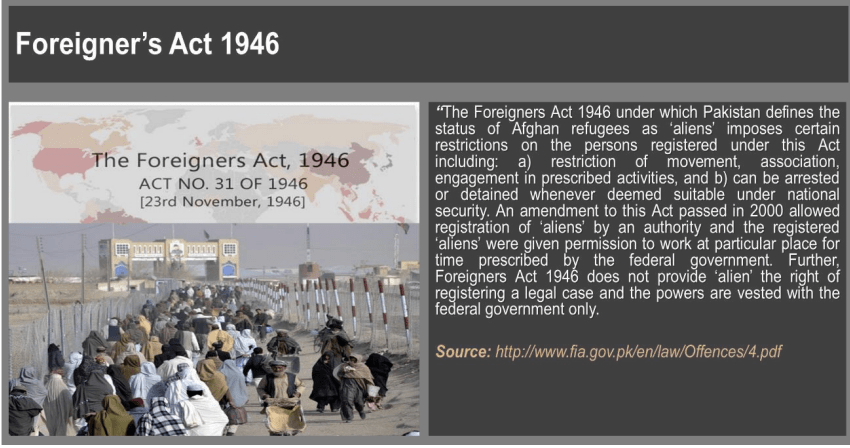
    Yes, Afghanistan as a nation state has never really accepted Pakistan. But, why so? One lens through which to look at this hesitance from Kabul is the creation of the Durand line without the consent of the Afghanistan state. The natural demographics and geography of Pakistan and Afghanistan have since long, pointed at how the equilibrium lies in a confederation of the two nation-states. Both equilibrium and the history of Afghanistan and Pakistan relations since 1947 aside, calling out Afghans refugees in Pakistan, is like tearing the heart out from the very concept of Pakistan. It is a counterproductive strategy.

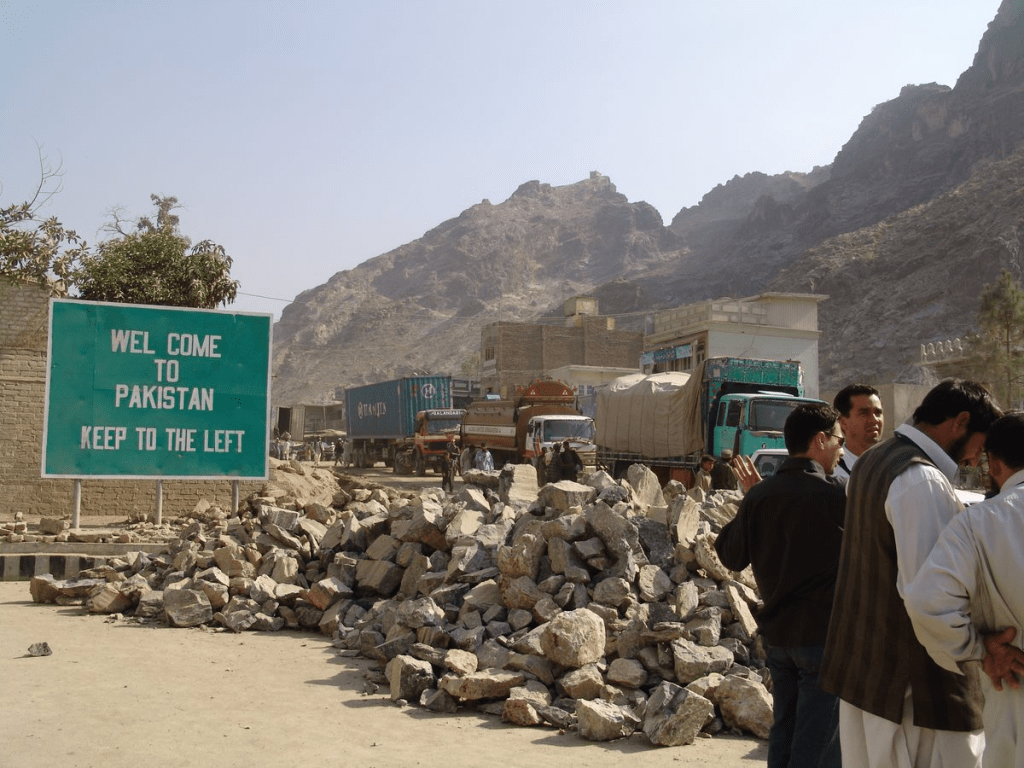
    Diplomatic troubles and travails aside, with the provision for the autonomous regions along the border of Afghanistan, Pakistan simply and informally moved its revenue territory inwards and allowed a free movement of Afghans and Pakistanis till the penultimate Soviet incursion into Afghanistan. Goods, likewise, were allowed to move to and fro, even before the UN Convention on the Law of the Seas.

    The 1979 Russian armed incursion in Afghanistan resulted in the first mass exodus of Afghans into Pakistan, with Pakistan hosting a peak of almost 6 to 7 million Afghans at one point in the early 90s which was then, followed by their return until 1999-2000. From 9/11 onwards and till the advent of the second (2.0) Taliban rule in August of 2021, the Afghan population in Pakistan oscillated between periods of moving into Pakistan and  returning back to Afghanistan—(barring a small peak inwards towards Pakistan in 2006-07)—mostly reacting to perceived local and often national economic conditions.

    Right after Taliban 2.0 in 2021, the number of Afghans entering Pakistan surged drastically. In this recent wave, Afghans fled due to fears of persecution and the perils of life under an extremist regime which to them, guaranteed no rights or rule of law in the manner they had grown accustomed to during the two decades under the US led coalition forces.

    Despite more than four decades of dealing with the waves of Afghans entering and residing and returning, Pakistan’s track record on the governance of the Afghans in Pakistan continues to be as it has always been – notoriously poor, mostly reactive and lead by security understandings and misguidance. An argument can be made that governance on the Afghan question was on par given Pakistan’s overall record of poor governance since 1947. Pakistan was simply unable to capitalize on the definite goodwill generated during the first exodus of Afghans and thereby continued to and continues to stumble today.

    In truth, the Pakistan government never looked at the issue of Afghans in Pakistan holistically or outside reactionary lenses which varied from humanitarian considerations to security. Afghans in Pakistan who were legally registered or were granted visas were largely allowed to operate economically and socially without any legal cover as long as it benefitted the interests of certain elements of the state or those of host communities. Elite Afghans also capitalized on this informality and worked hand-in-glove with their hosts for their own benefit—often at the cost of their fellow common Afghans in Pakistan. Yet on matters of identity, mobility, work, and social security for Afghans in Pakistan, the state protected its real interests through short-sighted approaches.

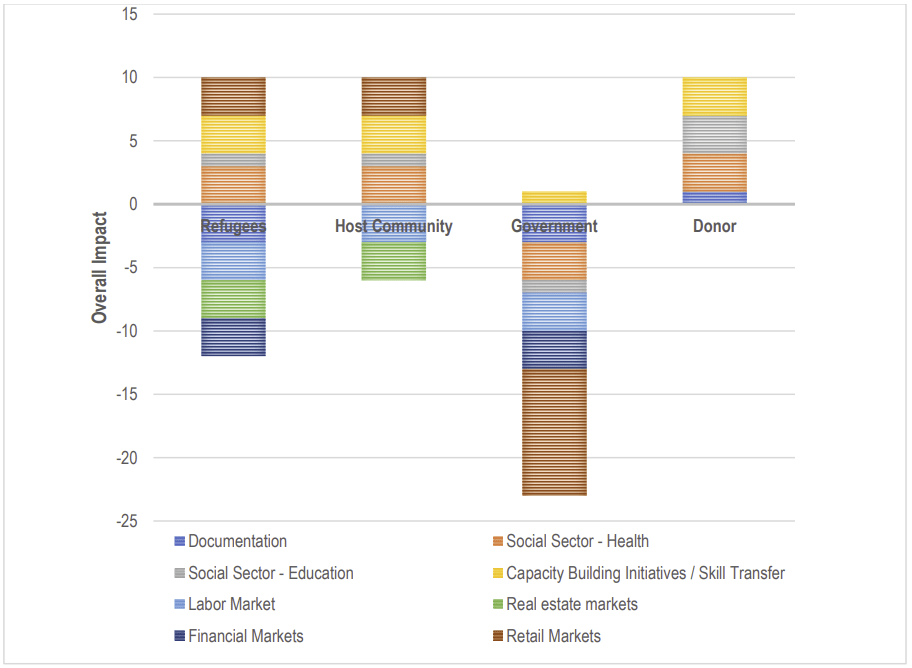
    Economically, Afghans in Pakistan contributed to the larger national economic pie but could’ve made better use of the formal economy if they were granted financial inclusion, and formal trading and connectivity rights. The current woes on currency and assets and illegal economic transboundary transactions could’ve also been dealt with and security matters ring-fenced much easier had this been legally allowed from the onset. However, the reactionary and shortsighted governance from Pakistan has much to account for both Pakistani and Afghan citizens.

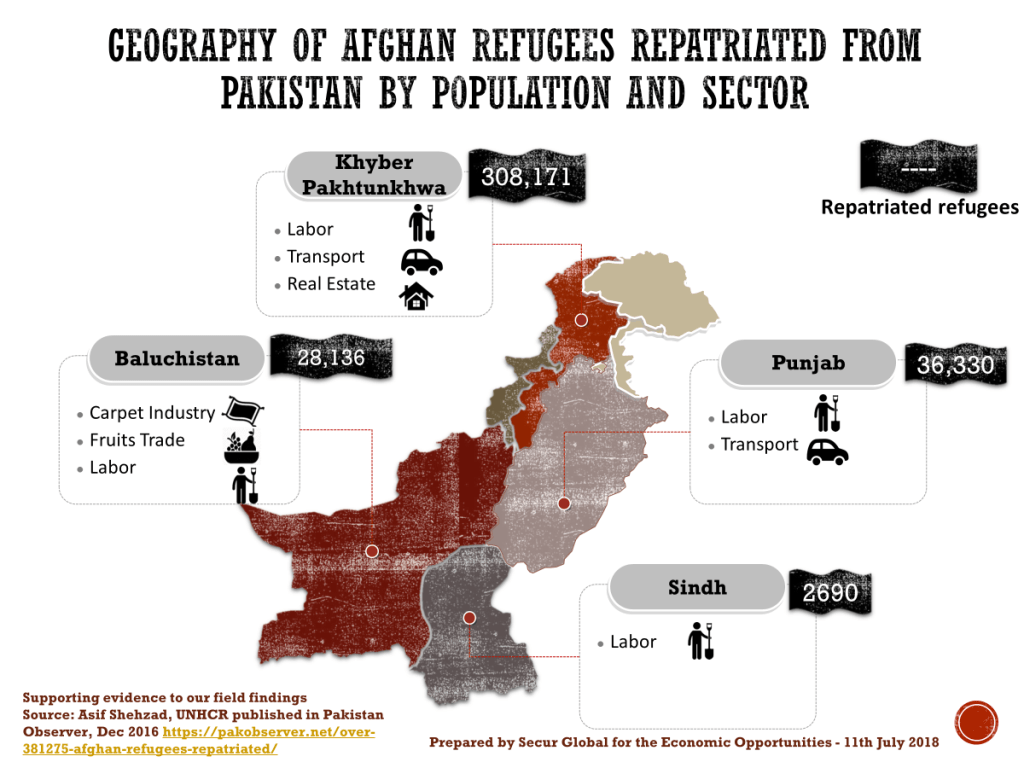
    Despite all this, the Afghans like most traditional migrant communities in Pakistan worked hard and delivered for their host country—albeit invisibly, due large segments of the Pakistani economy being undocumented. For example, the labor market, especially in waste disposal, construction, sales, carpets, gems and jewelry, handicrafts, retail, culinary, and transportation would not have been robust or thrived without Afghans in Pakistan. However, the mixed economic effects felt by certain populations and mostly by the state were due to them being confined to the informal. As a result, Pakistani labor was the first affected by this treatment.

    The fact is that Afghan labor, like most migrant labor elsewhere, always undercut local labor in price while delivering better productivity and skills—raising concerns amongst locals [reminds one of the stories of the Polish immigrants in UK] who in turn impacted national sentiments unwillingly, while not realizing that the fault lay solely with the state of Pakistan. An even sadder impact of this informality was borne by Afghan women and girls in Pakistan whose wages were undercut, and their labor exploited easily by greedy male Afghan intermediaries and Pakistani host families. The Afghan women labor participation rate in Pakistan has always been substantially above that of their hosts, given the poor female labor participation locally within Pakistan.

    Then one should talk of fresh and dry fruits, pharmaceuticals, renewable energy, recycling, and the electronics sector in Quetta. Also, carpet weaving, gemology, and transportation industries in Peshawar. Real estate investments in the capital Islamabad to other key cities like Karachi, to introduction of new trends and designs to local markets makes it evident that Afghans in Pakistan have benefitted from joint ventures and partnerships with local host communities. However, the state of Pakistan due to its shortsighted policies has only lost in the longer run, be it GITA (Goods In Transit to Afghanistan) trade or its desire to have strategic depth in the east.

    This present forced displacement will bear out no different. The memories of Sikhs being evicted in the name of partition by local vested interests in Rawalpindi in 1947 who only acted in self-interest and not that of the birthing state of Pakistan has come back to haunt the country. Are the Afghans being asked to leave Pakistan today suffering the same fate?

    Sadly, all signs point to it. The state of Pakistan may have legitimate reasons, though throwing the baby out with the proverbial bath water is hardly a sensible decision for Pakistan’s overall security. Then there are also unresolved questions about the treatment of women, children, and the elderly in this forced journey back to Afghanistan, only to be complicated further by what awaits them on their perilous journey back home. Time is ripe to have this debate while keeping eyes wide open in the primary interest of Pakistan. More on this in a more detailed article, that Initiate Asia is working on.

    Note: An abridged and edited version of this article was earlier published in the “The News Pakistan” [https://www.thenews.com.pk/print/1130882-the-afghan-refugee-question] in November 2023.

    Two Reports by Reenergia LLC [www.reenergia.com] on a) intrinsic economic value of Afghan Refugees in Pakistan and b) opportunities for returning Afghan Refugees in Afghanistan, both completed prior to COVID-19, 2020, informed this article on economic issues.