Tag: Pakistan COVID-19 Response

  • Adapting Pakistan To Post Covid-19 Technology Gains: Some Thought Pathways

    Adapting Pakistan To Post Covid-19 Technology Gains: Some Thought Pathways

    The Covid-19 pandemic has transformed our lifestyles in so many ways. The revolution in the conduct of business and the increased role of technology are the most crucial ones. Changing patterns of earning and spending have resulted in people and businesses being more reliant on digital means. Technology-driven businesses survived and thrived during this global pandemic. Evaluating the patterns of the past year, one thing is clear that these changes are here to stay.
    Post pandemic, a massive compression of technology adoption and adaptation is happening in Asia, but Pakistan, still amongst the least technology-friendly states, is lagging. Is the enabling environment in Pakistan holding back this technology adoption and adaptation? Is dearth of capital chasing technology innovation in Pakistan holding back emergence of ideas and innovations and entrepreneurs, or is it the absence of ideas and skills and ‘real’ education?

    Here is an attempt to provide some thought pathways for Pakistan to adopt and adapt to post Covid-19 technology gains.

    For arriving at these pathways, we must review post Covid-19 and other emerging trends underpinned by technology.

    Remote work is here to stay changing the geography of jobs and therefore living preferences. With the outbreak of Covid-19, offices, firms, and industries had to encourage their employees to work from home through online systems. Today, it is observable that virtual meetings are held through apps like “Zoom” and “MS Teams” and more. Since remote work is becoming increasingly common, the geography of jobs is also going through a transition. Now that everything has become accessible through the internet and technology, the demand for staying in cities has been decreasing rapidly. Due to this, the property prices in the urban areas, particularly those in the developed states, are on the continual decline as well.

    Last mile delivery, remote shopping, and e-commerce have gotten a boost and these trends will not back off. People have now become acclimatized to the new normal. By adapting to the changing patterns, people now prefer having most tasks done while staying at home and using emerging digital customer service trends pervading e-commerce. During the pandemic, retail and financial and food services have undergone change. Instead of having to go to the malls, people now prefer shopping online. Due to restaurants being shut down, food is ordered online through apps like “Foodpanda”. Grocery stores have also shifted their business to being more e-commerce oriented. Even the Karachi icon Agha’s Super Market Store attempted e-commerce before completely dying down due to a late transition post pandemic.

    Demand for resilient skills and not university graduates in traditional fields is changing the demand for learning. Cognitive skills and critical learning are very crucial to survive in the contemporary world. Grasping the understanding of socio-behavioral patterns and utilizing them to deliver services through critical thinking is the emerging need in all spheres of commerce and life. The share of employment in occupations intensive in non-routine cognitive and socio-behavioral skills is on the rise since 2001—from 19 to 23 percent in emerging economies and from 33 to 41 percent in advanced economies. People with critical thinking and cognitive skills with a better understanding of the socio-behavioral patterns are preferred in the employment processes. These adaptable skills enable people to transfer more easily from one task to the other. This in turn is changing the nature of demand for education and skills—learning of different nature is being sought.

    Digital platform jobs are raising opportunities for jobs in connected rural areas. Technology is challenging the traditional boundaries of firms and global value chains. The geography of jobs is changing due to the pandemic and the emerging digital platforms. New business models involve dependency on digital means and can thus evolve rapidly from local startups to global behemoths, often with few employees and tangible assets. These digital platforms tend to form and run clusters of businesses in underdeveloped rural areas.  Even in the places like Vietnam, Bangladesh, Nepal, Kenya the economies are moving to rural areas due to digital platform jobs.

    Digital platforms have rationalized the hype about the gig economy. The gig economy refers to a labor market dominated by freelance work. Though there has been much talk about this, the takeover of the gig economy is a rather gradual process. Freelance work today is less than half a percent of the total economic labor force of the world—Freelancer, Upwork, and Zhubajia have a total of 60 million users. What is happening is that before the gig economy came about, organized platforms or e-commerce platforms have started coming around. There is a limit to what an individual contractor can do unless they are a part of a team. The team is where the innovation happens. Virtual clusters have been formed and continue forming. Instead of the gig economy, we now have platform firms which are dominating the markets.

    Pandemic or not, technology has already been shaping the way future services are delivered—the pandemic is simply shrinking the timeline.

    Manufacturing shop floors are now dominated by robots—replacing people and jobs. The major manufacturers around the world have amalgamated their commitment to artificial intelligence and technology in their business agendas. Mercedes, Toyota, Nissan, etc. are implementing the idea of artificial intelligence and technology in their product lines and factory stores to survive in the emerging business trends. In the next ten years, the global economic patterns are expected to transform completely. Since mid-2020, nearly three million industrial robots got into operation. That is more than the total number of robots that got into operation between 2014-2020. Due to increased dependency on technology, it is evident that robots are the future—pandemic or no pandemic!

    Reshoring could potentially impact global value chains. Global economic institutions are debating whether global value chains will survive? A lot of people feel threatened due to the pandemic and related chaos. Immense work is being done to draw out ways to get out of this turmoil. A continual vast-scale expansion of the businesses like Amazon and Alibaba has been observed recently where brick and mortar stores are unable to compete. The trend of carrying out businesses over the internet has been more immune to potential lockdowns. Thus, investing in automation and reshoring production can prevent the value chain disruption greatly. Travel restrictions have impacted the trade patterns greatly. Many states, including China, are working on reshoring. Businesses reliant on imported inputs are facing a crisis due to disruption in global value chains. Amendments in the trade policy are required and many multilateral institutes like World Trade Organization, World Bank Group, and World Economic Forum are pondering upon how to deal with this matter.

    The key to learning the pathways towards future resilience lies in those who survived best through the pandemic—be that resilience against the current or future pandemic or a war or any other natural or created global disaster. Those businesses that were resilient, were the ones that were either already adaptive to technology or had adopted it quickly in their business plans, were the ones that survived the best during the pandemic. Such businesses were able to harness technology to simulate operations and automate manual processes. Businesses that had amalgamated the use of technology had productivity advantages as well. The past year has made it evident that spending is now going to technology-driven businesses. They were able to immediately gear up to work remotely, collaborating through technology. Thus, in times when several businesses were going through loss and many being shut down, these businesses with digital advantage were able to maximize their productivity and sustain company culture. Furthermore, having a digital advantage also prompted businesses with an agility advantage. By providing them with data-driven insights, the ability to make faster decisions and faster action. Usually, cultures halt the process of adaptivity to change, but because such businesses had cultural flexibility, it made it easier for them to adapt to the changing course.

    These emerging and evident trends have immediate lessons for Pakistan and its government to help commerce and society to adapt to this increased role of technology.

    Invest in human capital and that does not mean merely sending them to educational institutions. Rather introduce to them the concept of life-long learning. Provide them with opportunities to gain knowledge, polish skills, and train cognitive skills—the narrative of higher education degrees as panacea for progress needs to be rethought.

    Innovative education is the need of the hour. It is important to rethink the ways how the youth is being educated. Having a piece of paper (degree) in the hand must not be the only precondition of getting the job. Just look at how Google education program is questioning traditional ‘knowledge for commerce’ institutional approaches. People must be given chances to acquire cognitive and socio-behavioral skills. Competence must be evaluated based on skills rather than based on a degree that one holds. Education for livelihoods is veering apart from education for purely knowledge and learning.

    Provide the populace with social protection. This is a two edged sword and helps cut through inequity while providing avenues to mainstream technology—whether targeting or adopting universal basic incomes. This links directly to creating appropriate fiscal space and ensuring nobody escapes tax—yet another policy that will need main streaming technology to implement. Government must introduce new tax structures that involve advancing IT and artificial intelligence to enhance appropriate taxation rather than the current inequitable presumptive and use based tax net.

    Government must ensure affordable and accessible internet connectivity for all. Today, this is better than providing physical access through roads and much cheaper. The job creation potential of universal internet and broadband access is incredible. This can also enable emerging Pakistani digital platforms to grow and also for global digital platforms to use Pakistan as a base.

    Immense emphasis must be placed on minimizing rural energy poverty. One hundred and forty million or nearly half of the people in Pakistan have either no or partial access to power, even though the government claims achieving ninety percent electrification. All the services that we are going to have to deliver are not going to happen by building new schools and universities but rather through making technology accessible. Since it is difficult to go to everyone’s doorstep to provide them with services, it is crucial to ensure easy access to electricity and the internet.

    Governmental authorities must consider steps to reduce labor market rigidities. People must be allowed to move and transition jobs, reform financing arrangements, and labor market norms. Conversely too much informality in the employment sector due to labor market rigidities thwarts formal accounting and transition and mobility of jobs as prospective job seekers and those employed. For job market to respond to signals it first has to be formal.

    Adapting to the changing patterns, the government must introduce IT-enabled governmental services. IT demand development must be encouraged to move jobs from one generation to the other. Government as the largest formal employer in Pakistan provides the natural platform to lead in technology adoption and adaptation by IT enabling governance.

    Government should get industry to focus on establishment of data centers which are at the core of all future technological adoption and adaptation. Pakistan’s northern areas provide the natural environment to enable sustainable power driven green data centers for the growing local and global cloud storage and computational needs. There are three good reasons why data centers must be established in the northern areas of Pakistan. First, because they require abundant clean energy. So, you need a lot of renewables and the northern areas have a lot of water and hydropower potential, in addition to other renewable power sources. Secondly, they require a cooler climate which northern Pakistan provides. The third requirement is literate and youthful human resources—abundant in Gilgit-Baltistan, and Chitral.

    Developing new cities that are clustered, high-rise, small, innovative, youthful cities. Pakistan has an acute dearth of middle sized and small cities given the size of its population. Coupled with this is the trend to spread development horizontally thereby making it difficult to provide services efficiently. Investing in vertical city centers and new cities attracting the youthful population will enable innovation and entrepreneurship—albeit with a new local model of governance for these cities. This will help to shift the geography of jobs and will work as a catalyst to boost development and prosperity.

    For Pakistan to ensure its stability in the emerging technology-reliant world, it is important to adapt to the digital means. Pakistan needs to start working over the free provision of internet services, encouraging innovative education and making technological usage common.

    Note: Written with support from Yemeen Hasan (yemeenhasan@gmail.com).

  • 2021, snakes and ladders and a virus exposing virulent buffoons

    2021, snakes and ladders and a virus exposing virulent buffoons

    2020 has ended, at least by the Gregorian calendar. As always, we are fooled by the time buffoons. Hope springs eternal. This turn of the year, I, for one, am part of this clan, though albeit, reluctantly. 2020 for me was the year of snakes and ladders. Chance pitted morality and malice in a game of realization; conspiracy theories aside.

    It was not who did it, but rather what happened, that decided the outcome of 2020—it did not take much to expose the neanderthal within, and the global community was exposed for its posturing and conflict. The earth won.

    It showed us the power of regeneration. The Earth made a comeback and reminded us, much as Claude Lévi-Strauss alluded to in Tristes Tropiques, that it was here long before we came and will be here long after we are gone.

    The sheer banality of the human, especially the so called human leaders’, discourse in 2021 left me wanting to retch, which I did with abandon. No multilateral claims, nor bilateral ones or unilateral ones, stood any chance in the face of a microcosm of a beast—the COVID-19 virus. We were all exposed as selfish nations, as selfish global communities. Let there be some cheer in that.

    Cheer, for now we can, if wise, set a course where technology and this realization should allow us to set a new path for this century and beyond. Will we be doing that? Not much gives me hope. All I see is a hope to get back to what we were doing. Sad, indeed, for this pandemic has shown us how to re-write the basics of global interactions if we want a better future for our children.

    Who cares about children, for, virulent buffoons, driven by a false sense of community and wealth, are driving us insane? That we are still unable to build a global governance structure post Westphalia and the World Wars, and the emerging humanity submerging in the nexus of disaster and conflict, is a clear indication that we have no game-plan.

    From a cry-baby in the largest democracy on earth to the chest thumping racist pig leading the second largest one, and the self-presuming rats running the game of prosperity, we are nowhere.

    The market of human emotions is being played by Bretton Woods multilateralism sloganeering, while we, the people of this world, are behaving like innocent chumps and crying hoarse and befooled into Black Fridays of desires and deprivations.

    Indebted nations and indebted people are the harbingers of much that will be at play this year. No degrees or CEOs or pretend leaders can save us. Only a collective bargain amongst humans using the technology platforms of social media can bail us out. Will they organize?

    Leadership itself must be rethought. We need a collective and inclusive mind with a desire for action. I sense that if we do not take charge the artificial intelligence, we so nurture, may well beat us to it.

    Before I close, a thought about Pakistan. Time has come for rebuilding a national consensus through plebiscites and by delinking election of representatives from election of ideas. The problem here and the problem globally is the same. We must take on serious thought and discourse as a building block and let the rat-race die. I know, you will say, dream on! But dreams are the builders of hope and good cheer! Blessings for 2021.

  • Pakistan’s COVID-19 Response: Pro-activity, Impact and Needs Assessment, and Using IT Proactively

    The Government of Pakistan should be carrying out a Covid-19 Impact and Needs Assessment (CINA), in accordance with the global practice. [https://empowerpakistanbyazd.blog/2020/03/27/pakistans-covid-19-response-and-the-international-financial-institutions-where-is-the-rapid-needs-assessment-and-a-national-action-plan/]

    The tool preferred for the required COVID-19 CINA in Pakistan is a Post Disaster Needs Assessment (PDNA) and Recovery and Peace Building Assessment (RPBA) hybrid, without delving into the tedious Damage and Loss Assessment (DALA). Essentially in this desired CINA, there should be three components: service delivery, social cohesion and economic impact.

    While some may rebut this idea, this can be an enormous management tool for the government during, and post crisis, and can be done by a dedicated team in parallel with the reactive measures that are being taken to manage the pandemic.

    In aid of developing this impact and needs assessment for Pakistan, we should opt for an off the shelf information technological analytical tool system that assists in the information gaps for COVID-19:

    a) ability to react in real time to media (both informed and disinformed and its ratio) based on a knowledge about the public understanding (and source of formation of the public understanding) of the disease and associated pandemic;

    b) general public’s preparedness for any potential longer-term societal disruptions;

    c) knowing how public perceive available health care and access the same;

    d) how is work being delivered from home and how is workforce being disrupted by the same;

    e) how are small and medium enterprises being disrupted;

    f) disruptions in the transports and logistics and essential services.

    This tool can then also be utilized to do real-time monitoring as follows.

    • Monitoring for compliance with stay-at-home and quarantine measures.
    • Monitoring to identify population flows to hospitals and pharmacies.
    • Monitoring of hospital infrastructure to understand staff readiness and hospitalization rates.
    • Forecasting of hotspots within urban zones as identifying latent areas for further monitoring due to population out-migration.
    • Developing of assistance (rations and cash) tracking system to integrate COVID-19 countrywide efforts.
    • Integrate monitoring and forecasting insights with assistance tracking system to facilitate actionable and agile decision-making.
    • To assist in COVID-19 related CINA.

    All this can be achieved by combining real-time data from social media, newspapers, and other digital public opinion streams with traditional survey data, by algorithms and geospatial analysis. One can integrate insights from social media analytics, Internet of Things data, financial transactions, and Human Movement data to assess both national and hyper-local social disruption associated with COVID-19.

    In summary, there is a dire need for setting up effective monitoring of quarantine compliance and local healthcare capacity coupled with actionable reporting and forecasting of disease hot-spots. The daily monitoring snapshots and forecasting outputs can be seamlessly integrated into an assistance monitoring system to support decision making.

  • Pakistan’s COVID-19 Response: Help the SMEs, please @Government of Pakistan

    SME’s need help!

    The need for the government to help small and medium businesses is growing by the day as the lock-down continues. This has also been a key issue discussed during the daily virtual global-national brainstorming meetings being spearheaded by PIDE. How should the government help these SMEs during this pandemic and resulting economic slowdown?

    In the previous discussion “Pakistan’s COVID-19 Response: What of the Small and Medium Enterprises?” the significance of helping SMEs was highlighted and questions were raised about adequacy of the government’s COVID-19 fiscal support package and about who will be spearheading cause of the SMEs. [https://empowerpakistanbyazd.blog/2020/03/31/pakistans-covid-19-response-what-of-the-small-and-medium-enterprises/]

    SMEs matter to our economy!

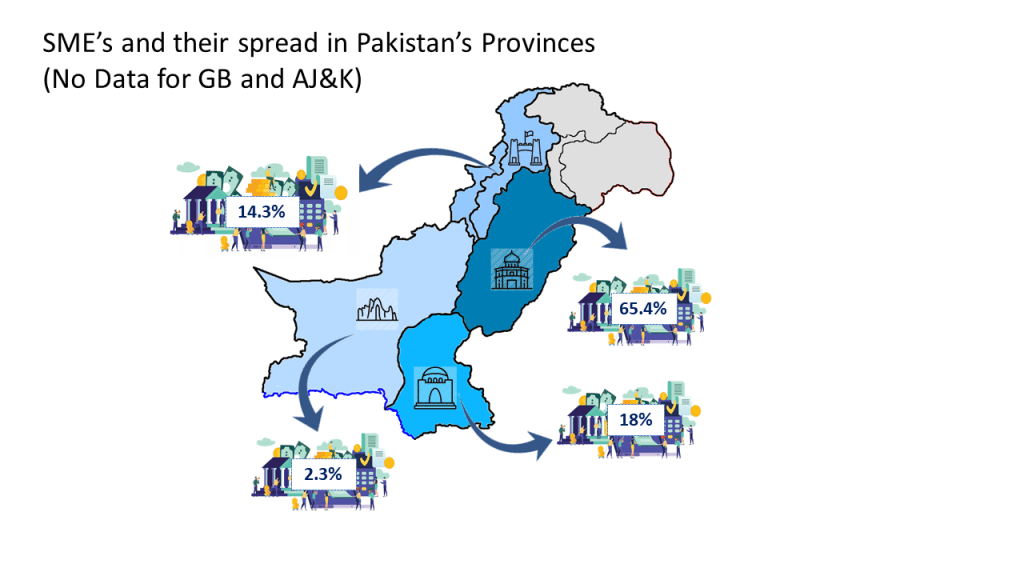
    Allow me to refresh our collective memories. Somewhere between 3 and 4 million SMEs collectively provide 90 percent of the overall employment in Pakistan. Excluding the agriculture sector SMEs, 78 percent of the workforce is SME based. SMEs add 30 percent to 40 percent to the GDP of our country—depending on whose numbers you believe. They are spread in the proportion of our population across our provinces.

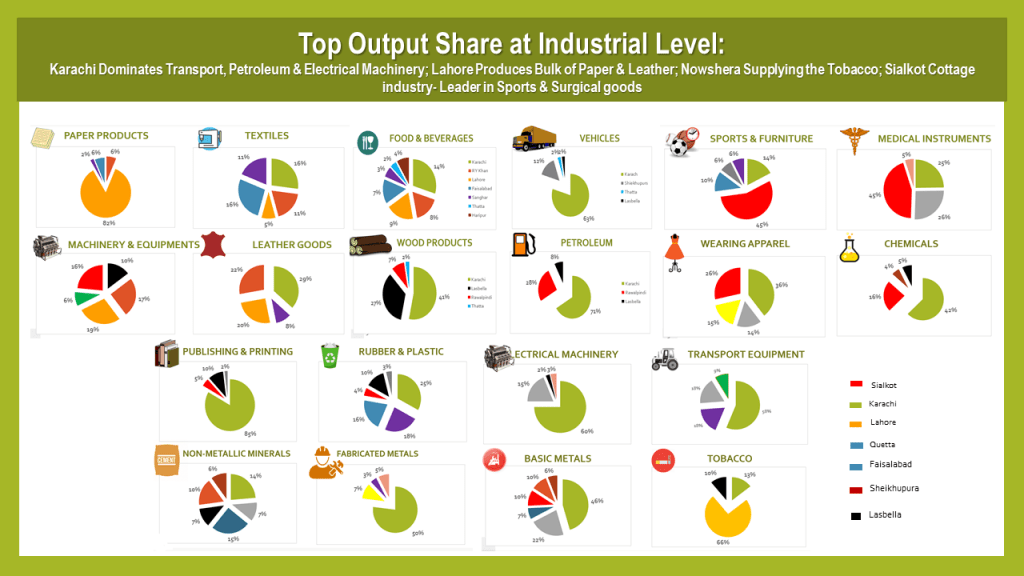
    These SMEs are in almost every imaginable sector: 10 percent in Wood & Furniture; 4 percent in Jewelry; 16 percent in Grain Milling; 5 percent in Art Silk; 4 percent in Carpets; 7 percent in Metal Products; 13 percent in Cotton Weaving; 6 percent in Other Textiles; and 35 percent in Other Sectors.

    This last “Other Sectors” is important. Technology and other start-ups, intellectual services providers, and so on constitute this “Other Sectors” category and are really where a lot of the employment for those with higher education is concentrated. The IT SMEs contributing to our exports fall within this category.

    The CONVID-19 resultant layoffs will hurt SMEs more than the big-industry!

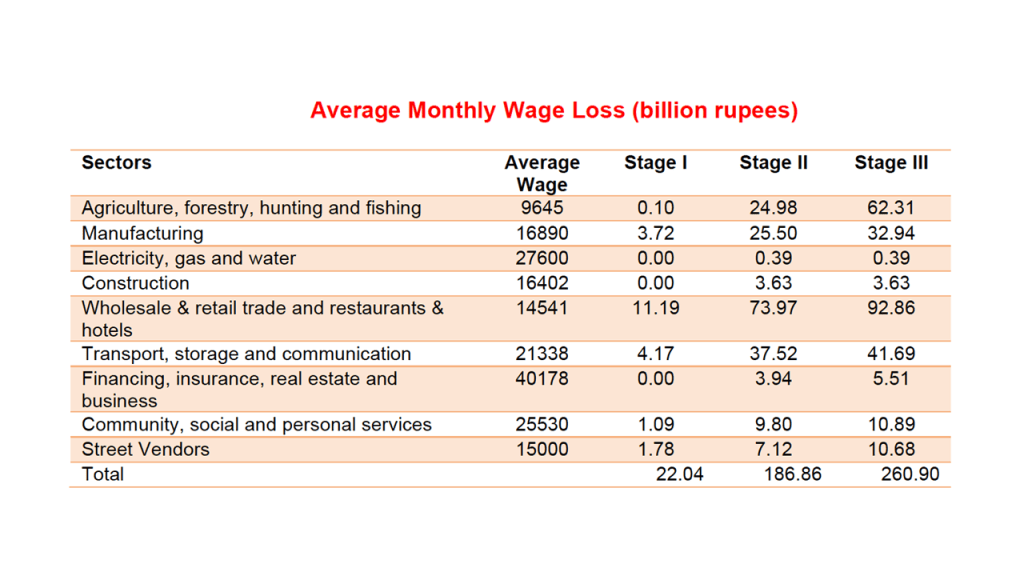
    PIDE’s recent analyses in its recent CONVID-19 response bulletins on “Impact on Employment – Layoffs” [https://www.pide.org.pk/pdf/PIDE-COVID-Bulletin.pdf and https://www.pide.org.pk/pdf/PIDE-COVID-Bulletin-4.pdf] show the we are heading toward a vulnerable employed layoff in the neighborhood of 20 mil persons. Taking the range of estimates available, we have between 30 and 40 million Pakistanis employed by the SMEs. What the layoff estimates mean to SME sector is anyone’s guess, yet it would not be unreasonable to assume that almost a third to half of the SME sector employees are at risk if this slow down continues another month or so.

    SMEs are not benefited by the post COVID-19 relief measures posited by the State Bank of Pakistan (SBP)

    There is very little credit to the SME sector. SMEs finance is around 7 percent of the total private sector financing in Pakistan. The total outstanding SME financing per SME is barely 2.4milPKR per SME—way lower than even the allowed exposure of up to 25milPKR by SBP. This is further verified when we find that 83 percent of all credit by the SBP and scheduled banks is to the government sector (including State Owned Entities or SOEs). So, deferment of loan payments, lowering of interest rates, and other such financial measures really don’t by and large impact the SME sector of Pakistan.

    SME Financing by State Bank (Rs in Billion)Jun 19Sep 19
    SME Financing (outstanding)464.86422.12
    Domestic Private Sector Financing6,200.06121.1
    SME Financing as percentage of Private Sector Financing7.50%6.90%
    SME NPL ratio17.04%18.95%
    No. of SME borrowers183,606182,149

    Supporting Pakistani SMEs requires direct support to them through innovative approaches which may have multiple impacts

    Government of Pakistan should directly offer to support the SMEs as follows.

    A) Provide wage and rental subsidies to SMEs who have tax registration with FBR; this can be in the form of cash payments directly to SME employees and to lessors.

    B) Advertise that all SMEs registering with FBR through a simplified registration procedure will get all the same subsidies.

    As a start, both these measures will compliment the cash payment schemes for through the Kafalat program of Ehsas and will have a higher stabilization impact than supporting large businesses at this time.


    Acknowledgements to contributors

    Useful inputs for this blog were received from Ms. Uzma Zia (Senior Research Economist) and Dr Usman Qadir( Senior Research Economist), both at the PIDE.


    References other than those listed above

    Economic survey 2018-19

    Akhtar S. H. Shah (2018) Framework for SME Sector Development in Pakistan, Planning Commission of Pakistan Ministry of Planning, Development & Reform Government of Pakistan

    SBP website (http://www.sbp.org.pk/sme/index.htm)

    Quarterly SME Finance Review(2019), SBP (http://www.sbp.org.pk/sme/PDF/DFG/2019/Sep.pdf)

    SMEDA (https://smebank.org/media-center/sme-sectors-brief/)

    Zafar, A., & Mustafa, S. (2017). SMEs and its role in economic and socio-economic development of Pakistan. International Journal of Academic Research in Accounting, Finance and Management Sciences6(4).

  • Pakistan’s COVID-19 Response: What of the Small and Medium Enterprises?

    I am lucky to be part of a very able and noble group under the aegis of Pakistan Institute of Development Economics (PIDE) who are daily undertaking analysis and discussions and recommendations geared towards the policy makers in our holy state of Pakistan.

    Today, after the daily morning virtual meeting of this group around COVID-19 issues, I came out thinking about the reality of my existence and of my associates in my small ‘do tank’, Reenergia! I am therefore going to talk about and present a use case of a Pakistani SME albeit on the ‘small’ rather than on the ‘medium’ side.

    Between Reenergia and its sister concern Paidartwanai, we have an annual turnover of less than 120milPKR. We have about a dozen employees and another half a dozen temporary/short-term staff, and all the typical overheads you can think about! Just FYI, loans to banks are not one of these overheads as banks in Pakistan tend not to look favorably on us—though included are loans extended either as advances by Clients or individuals. Let us review how COVID-19 is impacting us by asking some questions.

    First, how much has our work suffered due to the COVID-19 slow-down—in terms of pre-COVID-19 versus now/post COVID-19 business projections. These projections do not include slow-down in business development; but are based on work already developed and about to be signed/contracted. Our estimate of this slow-down is about 30 percent of projections.

    Second, how much is the slowdown in business development? This has two parts: a) the slow-down in the reactions to the work already solicited—includes delayed responses to proposals already submitted or being submitted; and b) the slow-down in solicitations for our services. Both are due to the Client base business slowdown or simply difficulty in working-from-home or even revision of priorities. All this hits our bottom line over the next six months by another 20 percent.

    With a cumulative impact on our SME of a reduction in revenues of around 50 percent of projected, we are beginning to see another, third, aspect which is hurting SMEs like us: the slow-down in receivables on work already in hand. This is also alarming as we are the part of a value chain and with a small size SME like ours, we are literally the ‘daily wagers’ of the SMEs and businesses. We don’t have reserves to keep paying our employees and our bills and rentals.

    I have not accounted for another fourth element which I see affecting almost every SME around us, especially in the tech and services sector; the inability to keep up the pace of work while working-from-home or the absolute inability to work remotely. I will not handle this presently as we are relatively less impacted by this element, till now.

    Pakistan, our operating environment, categorizes enterprises that have up to 50 employees and an annual turnover of 150milPKR as Small Enterprises (SE), and those with an annual turnover between that of 150milPKR and 800milPKR as Medium Enterprises (ME). The Small and Medium Enterprise Development Authority (SMEDA) of Pakistan categorizes SMEs overall as enterprises with up to 250 employees and turnover up to PKR 250 million. Pakistan has between 3.2 to 4.5 mil SMEs.

    These SMEs contribute up to 40 percent of GDP—adding more than 17trillionPKR. SMEs employ around 80 percent of the non-agriculture labour force—employing a total of around 32 million Pakistanis [between 7 to 10 employees per SME]. Estimated average monthly salary of a SME employee is anyone’s guess but I estimate we can take a range between 30,000PKR and 55,000PKR.

    Where are we heading with talking about how the COVID-19 is hurting a SME business like mine and about SMEs in Pakistan? Here’s the thing. If we, at Reenergia, are estimating revenues going down by 50 percent by June, what does this mean for other SMEs? Are we looking at SMEs laying off workers? [https://www.thenews.com.pk/print/633712-forecast-of-covid-19-pakistan-may-face-12-3m-to-18-53m-layoffs-says-study]

    Are we looking at an almost 8trillionPKR drag on the economy? How can we cater for the SMEs’ workers? Looking at the 100milPKR relief in the Prime Minister’s COVID-19 relief package, I am wondering if it is adequate? There is obviously no way that Pakistan’s government can afford emulating Canada or others, but even a 100bilPKR package for SMEs alone implies a onetime support of 3,125PKR per person employed in the SME sector of Pakistan.

    Who is thinking about this? Planning Commission? Ministry of Finance? Pakistan’s National Security Council? Should not institutions supporting SMEs in Pakistan not be taking a closer look? Karandaaz? SMEDA? Who?