Tag: #Taliban

  • Afghans in Pakistan

    Yes, Afghanistan as a nation state has never really accepted Pakistan. But, why so? One lens through which to look at this hesitance from Kabul is the creation of the Durand line without the consent of the Afghanistan state. The natural demographics and geography of Pakistan and Afghanistan have since long, pointed at how the equilibrium lies in a confederation of the two nation-states. Both equilibrium and the history of Afghanistan and Pakistan relations since 1947 aside, calling out Afghans refugees in Pakistan, is like tearing the heart out from the very concept of Pakistan. It is a counterproductive strategy.

    Diplomatic troubles and travails aside, with the provision for the autonomous regions along the border of Afghanistan, Pakistan simply and informally moved its revenue territory inwards and allowed a free movement of Afghans and Pakistanis till the penultimate Soviet incursion into Afghanistan. Goods, likewise, were allowed to move to and fro, even before the UN Convention on the Law of the Seas.

    The 1979 Russian armed incursion in Afghanistan resulted in the first mass exodus of Afghans into Pakistan, with Pakistan hosting a peak of almost 6 to 7 million Afghans at one point in the early 90s which was then, followed by their return until 1999-2000. From 9/11 onwards and till the advent of the second (2.0) Taliban rule in August of 2021, the Afghan population in Pakistan oscillated between periods of moving into Pakistan and  returning back to Afghanistan—(barring a small peak inwards towards Pakistan in 2006-07)—mostly reacting to perceived local and often national economic conditions.

    Right after Taliban 2.0 in 2021, the number of Afghans entering Pakistan surged drastically. In this recent wave, Afghans fled due to fears of persecution and the perils of life under an extremist regime which to them, guaranteed no rights or rule of law in the manner they had grown accustomed to during the two decades under the US led coalition forces.

    Despite more than four decades of dealing with the waves of Afghans entering and residing and returning, Pakistan’s track record on the governance of the Afghans in Pakistan continues to be as it has always been – notoriously poor, mostly reactive and lead by security understandings and misguidance. An argument can be made that governance on the Afghan question was on par given Pakistan’s overall record of poor governance since 1947. Pakistan was simply unable to capitalize on the definite goodwill generated during the first exodus of Afghans and thereby continued to and continues to stumble today.
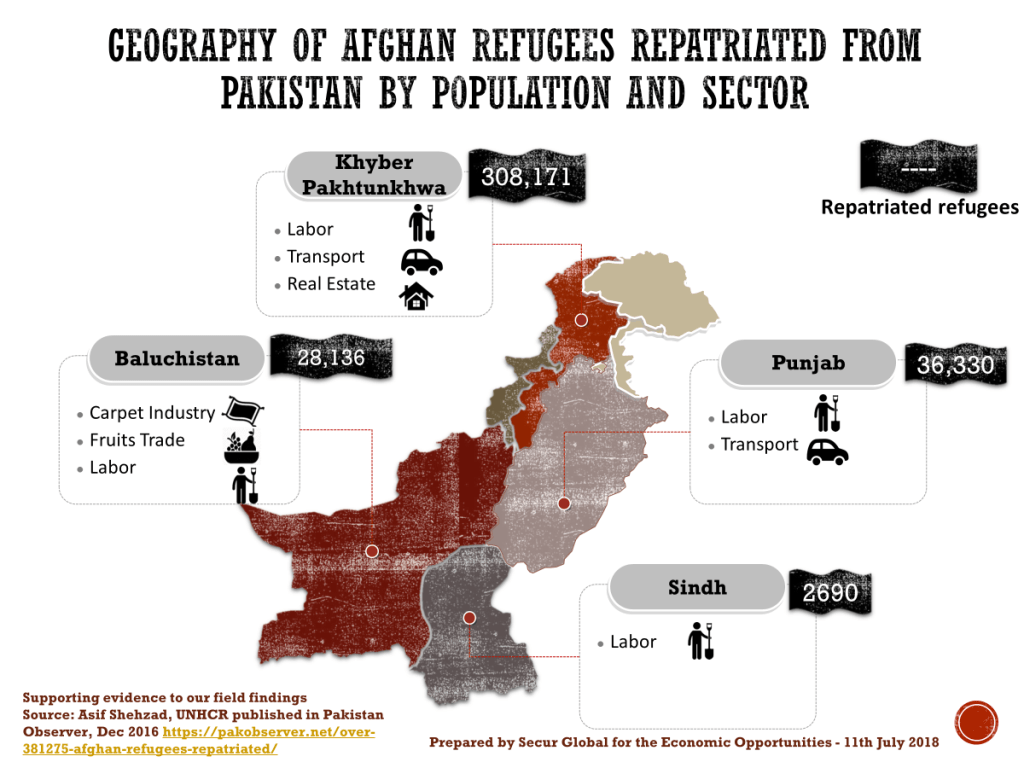
    In truth, the Pakistan government never looked at the issue of Afghans in Pakistan holistically or outside reactionary lenses which varied from humanitarian considerations to security. Afghans in Pakistan who were legally registered or were granted visas were largely allowed to operate economically and socially without any legal cover as long as it benefitted the interests of certain elements of the state or those of host communities. Elite Afghans also capitalized on this informality and worked hand-in-glove with their hosts for their own benefit—often at the cost of their fellow common Afghans in Pakistan. Yet on matters of identity, mobility, work, and social security for Afghans in Pakistan, the state protected its real interests through short-sighted approaches.
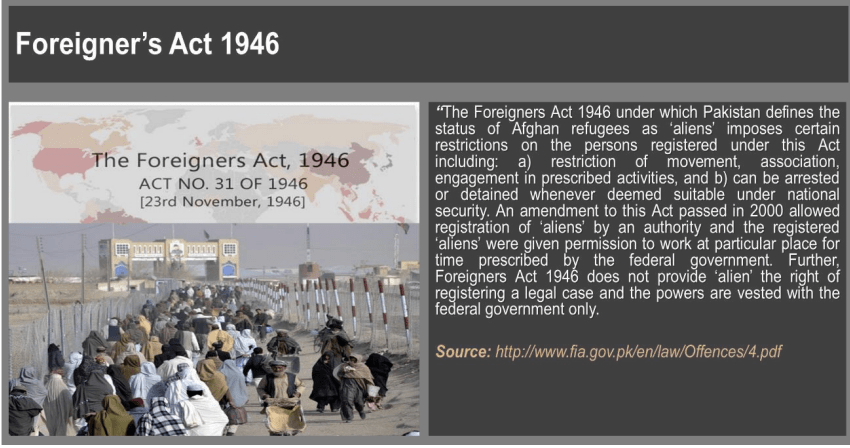
    Economically, Afghans in Pakistan contributed to the larger national economic pie but could’ve made better use of the formal economy if they were granted financial inclusion, and formal trading and connectivity rights. The current woes on currency and assets and illegal economic transboundary transactions could’ve also been dealt with and security matters ring-fenced much easier had this been legally allowed from the onset. However, the reactionary and shortsighted governance from Pakistan has much to account for both Pakistani and Afghan citizens.

    Despite all this, the Afghans like most traditional migrant communities in Pakistan worked hard and delivered for their host country—albeit invisibly, due large segments of the Pakistani economy being undocumented. For example, the labor market, especially in waste disposal, construction, sales, carpets, gems and jewelry, handicrafts, retail, culinary, and transportation would not have been robust or thrived without Afghans in Pakistan. However, the mixed economic effects felt by certain populations and mostly by the state were due to them being confined to the informal. As a result, Pakistani labor was the first affected by this treatment.

    The fact is that Afghan labor, like most migrant labor elsewhere, always undercut local labor in price while delivering better productivity and skills—raising concerns amongst locals [reminds one of the stories of the Polish immigrants in UK] who in turn impacted national sentiments unwillingly, while not realizing that the fault lay solely with the state of Pakistan. An even sadder impact of this informality was borne by Afghan women and girls in Pakistan whose wages were undercut, and their labor exploited easily by greedy male Afghan intermediaries and Pakistani host families. The Afghan women labor participation rate in Pakistan has always been substantially above that of their hosts, given the poor female labor participation locally within Pakistan.

    Then one should talk of fresh and dry fruits, pharmaceuticals, renewable energy, recycling, and the electronics sector in Quetta. Also, carpet weaving, gemology, and transportation industries in Peshawar. Real estate investments in the capital Islamabad to other key cities like Karachi, to introduction of new trends and designs to local markets makes it evident that Afghans in Pakistan have benefitted from joint ventures and partnerships with local host communities. However, the state of Pakistan due to its shortsighted policies has only lost in the longer run, be it GITA (Goods In Transit to Afghanistan) trade or its desire to have strategic depth in the east.
    This present forced displacement will bear out no different. The memories of Sikhs being evicted in the name of partition by local vested interests in Rawalpindi in 1947 who only acted in self-interest and not that of the birthing state of Pakistan has come back to haunt the country. Are the Afghans being asked to leave Pakistan today suffering the same fate?

    Sadly, all signs point to it. The state of Pakistan may have legitimate reasons, though throwing the baby out with the proverbial bath water is hardly a sensible decision for Pakistan’s overall security. Then there are also unresolved questions about the treatment of women, children, and the elderly in this forced journey back to Afghanistan, only to be complicated further by what awaits them on their perilous journey back home. Time is ripe to have this debate while keeping eyes wide open in the primary interest of Pakistan. More on this in a more detailed article, that Initiate Asia is working on.

    Note: An abridged and edited version of this article was earlier published in the “The News Pakistan” [https://www.thenews.com.pk/print/1130882-the-afghan-refugee-question] in November 2023.

    Two Reports by Reenergia LLC [www.reenergia.com] on a) intrinsic economic value of Afghan Refugees in Pakistan and b) opportunities for returning Afghan Refugees in Afghanistan, both completed prior to COVID-19, 2020, informed this article on economic issues.

  • Future Afghanistan economy? Taking clues from the economy of the ‘Taliban Group’

    Future Afghanistan economy? Taking clues from the economy of the ‘Taliban Group’

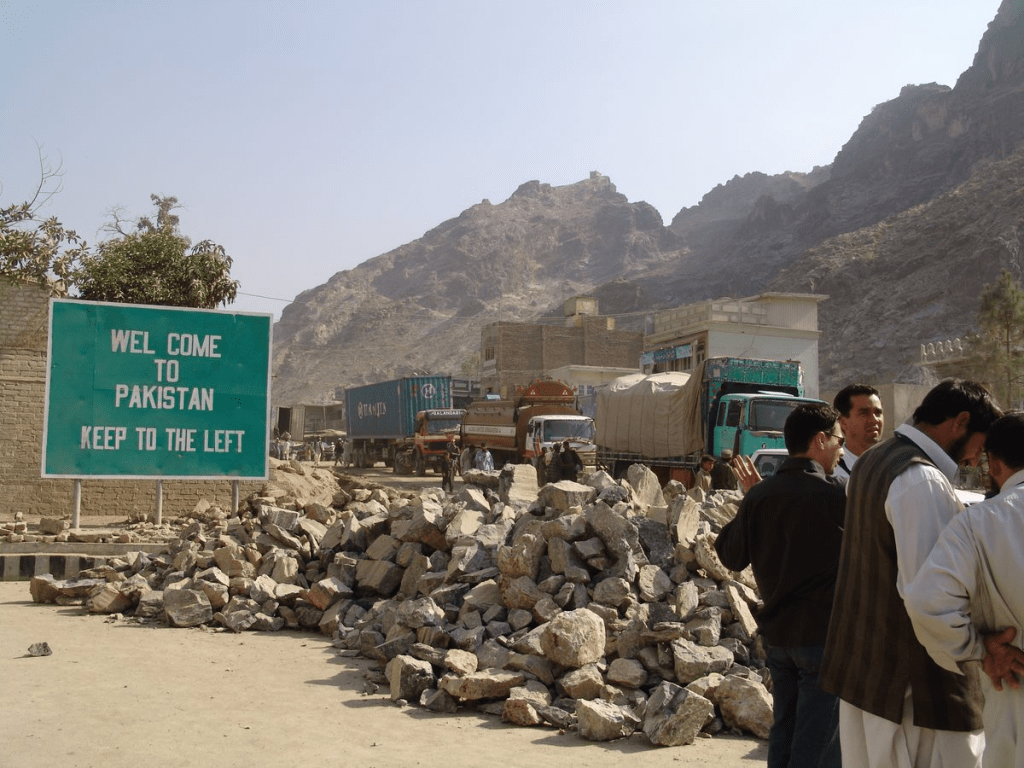
    The author, third from left at Afghanistan side of Towrkham, sometime post 9/11, with his guards, provided by the then Afghanistan National Army

    Amer Zafar Durrani with Tehseen Ahmed Qureshi and Hudda Najeeb Luni

    Islamabad, September 8, 2021

    The debate on how Afghanistan’s economy will fare, once the coalition forces, and their proxies and supporting service providers, have left, rages on. These forces are now almost gone. Taliban have announced their interim government structure after reasserting their control over what we know as Afghanistan.

    From an economic point of view, much has changed and yet much stays the same. Falsely propped-up consumption is fast going down. The prevalence of abject poverty in the masses stays the same. If anything, it is worsening by the day!

    What will be the shape of the economy going forward? A question that is linked very much to the structure and ‘spirit’ of the ‘Taliban Group’ governance going forward. Will the re-assertive 21st century Taliban dominated government follow the neo-colonial models, or, like Iran and China decide to beat a different drum?

    Leading all this preface is the still an unanswered question. When we talk of a country, a nation-state, do we talk of its people or its government? Naïve? Yes, and no. Is the comity of nations now an enemy of Afghanistan or a friend of Afghanistan? Why should assistance be stopped to Afghanistan due to a change of government given that primarily it is the people that suffer? These can be explored at another time. Important, though, to keep these in mind as one mulls the present primary topic.

    The author photographing an Antonov being unloaded at Kabul airport while he waits impatiently, midair, to land

    Afghanistan faces an economic collapse resulting from a sudden stop of foreign inflows, with a last measured[1] trade deficit at 25 percent of GDP in June 2021. Its foreign reserves, of USD 9 billion or so, have reportedly been frozen—by, you guessed it, their best friends till recent years, USA. There is no other, immediately visible, credit line.[2]. In the absence of foreign money, the only way left for the economy to balance the deficit is to contract. GDP shrinks, so demand falls, so imports decline. Exchange rate devalues a lot too, to cut imports.

    Unlike what is being hyped in media, this is not altogether sudden—as, not all was rosy pre-August 15, 2021. The Afghan economy stopped growing post-2012 after foreign aid started to decline from a high of about 50 percent of GDP. ‘Development’ was not being, as it cannot be, imported. Afghans living below poverty were increasing from 34 percent to more than half of the resident population[3]. The large injection of foreign money did not translate into sustainable growth.

    ‘Foreign’ money boosted temporary consumer spending but did not increase the domestic productivity. Imports, and exports, more than tripled. From USD 2.5 billion to USD 8.9 billion in 9 years—2003 through 2012—from USD 100 million to USD 390 million. Despite the increase, exports underperformed despite this tripling leaving the wide trade deficit mentioned earlier[4]. The exports were hurt by the real exchange rate appreciation—a result of the internal spending boom. Domestic revenue mobilization was also artificially buoyed due to this temporarily enhanced economy.

    The author, sometime post 9/11, inspecting Customs documents at Islamqala, Afghanistan, for trade coming in from Iran

    Not all of Afghanistan’s revenue—about USD 5.3 billion in 2021—was directly ‘imported’. Domestic revenue mobilization until 2021 was about half of the total government budget. Like any other dysfunctional government in its neighborhood, much of this ‘domestic’ revenue was collected at the border—direct border tariffs and presumptive business taxes. This, also, was declining in recent years. Primarily due to reduced imports and with lessening foreign footprint and thereby the overall consumption through imports.

    Afghanistan’s total budgetary outlay for FY21 was roughly USD 6 billion—30 percent of its GDP. Operation expenditures accounted for nearly USD 3.8 billion or 65 percent of the budget. With a domestic revenue collection amounting to around a third of the overall budgetary outlay and adding the external grants—also counted as revenue—the budget was short by almost USD 0.5 billion. IMF was to cover half of this.

    Afghanistan became a member of IMF fund in 1985, since then eleven arrangements were made between the two. The country’s “Outstanding Purchases and Loans” stood at nearly SDR[5] 0.4 billion in June of 2021[6]. Interestingly, IMF pledged its largest ever allocation of SDR to Afghanistan—USD 0.4 billion—which was to be effective in August of 2021. This has now obviously been put on hold or ‘seized’.[7] Was the IMF, read US Government lackey, per global narrative, not aware of the ground realities, or was it giving a false sense of security to the US installed government of Ashraf Ghani? Will we ever know?

    A major casualty of this upcoming budgetary contraction will be internal security and governance in Afghanistan—vide the inability to support the relevant institutions. Defense and internal security and justice accounted for almost 40 percent of the overall budgetary outlays. Couple this with economic affairs, we are looking at more than two thirds of the required budget to manage peace and stability in Afghanistan. Grants[8] and IMF financed this spending, hitherto. Where will this money come from now? More factors complicate the answers further. The opium economy of Afghanistan and the economy of the ‘Taliban Group’.

    Afghanistan being a quasi-narco-state is not, and has not been, a myth since last 3 decades. Afghanistan produces a major share of the world’s opium with a record of almost 10,000 tons set in 2017. Farmgate prices’ returns, direct money going to growers, was estimated at USD 1.4 billion—7 percent of Afghanistan’s GDP. Taliban, the 19th century version, banned poppy growing in 2000 with a view to acquiesce international legitimacy—popular backlash from Afghan growers and less than expected international reception led them to change their stance.

    Things, as mentioned earlier, have been on a steady decline, leading to August 15th. Three of the last four years have seen some of Afghanistan’s highest levels of opium production. Even as the COVID-19 pandemic raged, poppy cultivation soared, according to UNODC, 37 percent in 2020. UNODC also reported that the Taliban, the 21st century version, likely earned more than USD 0.4 billion in FY19 from the drug trade.

    So, the ‘Taliban Group’, if one can call it in corporate terms, has been running a state within a state. Call it the Taliban Group economy. This group has been running defense and civil expenditures. Consider, therefore, that they now need to adjust their budget to incorporate the wider state they have now charged themselves with. In some ways, they handled the defense part of this budgetary outlay far more efficiently than the Ghani government! There is hope in this. Instead of questioning the ability of this group to manage the Afghanistan economy, providing doomsday scenarios, speculating on how they should follow the neo-colonial diktat, maybe they should be given an update on what they are now taking charge of.

    Afghanistan’s economy is now a classic nexus of fragility and disasters, beyond simply an overt aid-dependency. Private sector, the key driver of growth, is almost non-existent—the formal side of it, at least, though some would argue that Afghanistan is entirely running on private largesse. Security and political instability are the major hindrance to private sector growth. Private sector development and diversification is constrained by insecurity, political instability. Institutions are weak, infrastructure is inadequate, corruption is widespread, property rights are ambiguous! Majority of the labor force is concentrated in low-productivity agriculture—44 percent of the total workforce works in agriculture and 60 percent of households derive some income from agriculture (can be read poppy by some). Afghanistan has weak. In other words, a textbook failed state as neo-colonials would put it.

    Displaced Afghan nationals compound the situation. Afghanistan has the third-largest displaced population in the world. Since 2012, some five million people have fled and not been able to return home, either displaced within Afghanistan or taking refuge in neighboring countries. Add this to a high birth rate, we have a young unemployed population looking towards the new government—more than quarter, or maybe even more, of Afghans present, were born after 9/11. With internal receipts dwindling and external aid—at least on surface—drying up some external financing will be sought by the Taliban Group—directly or indirectly. Here is where the most possible clash of ideas looks likely. The global financial architecture is not Sharia[9] compliant.

    Islamic finance, Sharia compliant, has two crucial parts, banking services and the Sukuk market—the Islamic equivalent of the bond market. Together they equate for around 95 percent of the documented USD 1,800 billion worth of Islamic finance assets.[10] Taliban like Iran, or even in fact China, will opt for integration into this system.

    Here again, there is hope, as currently there are more than 200 Islamic financial institutions around the world with investment funds in excess of USD 250 billion and growing at 16 percent annually, offer a possible solution.[11]

    In summary, there is hope as long as the Taliban Group recognize that the state is its people and the welfare of its people is what legitimizes the existence of the state, not integration into neo-colonial systems, alone. In ensuing dialogues, we should talk in detail about role of neighbors, especially Pakistan, and the likelihood of the Taliban Group showing the tenacity and perseverance in staying away from the neo-colonial legacies and striving to better the lives of Afghans beyond their current narrow interpretation of what betterment of lives entails!


    This article by the author was originally written for the Global Village Space, September 2021, edition, and this is the unedited submission.


    [1] World Bank. (2021). World Development Indicators, available at https://databank.worldbank.org/reports.aspx?source=2&country=AFG

    [2] Bloomberg (2021). US Freezes Nearly $9.5 Billion Afghanistan Central Bank Assets, available at https://www.bloomberg.com/news/articles/2021-08-17/u-s-freezes-nearly-9-5-billion-afghanistan-central-bank-assets

    [3] Ibid

    [4] World Bank. (2021). World Development Indicators, available at https://databank.worldbank.org/reports.aspx?source=2&country=AFG

    [5] What is an SDR, exactly? SDR is an international reserve asset created by the IMF from a basket of currencies including the US dollar, Japanese yen, Chinese yuan, the euro and the British pound. While not an official currency itself, the SDR is like an artificial currency that IMF member states can exchange for freely usable hard currencies like US dollars. Countries can exchange their SDRs for those freely usable currencies at a fixed exchange rate, which changes daily and is posted on the IMF’s website.

    [6] https://www.imf.org/en/Countries/AFG#

    [7] https://www.aljazeera.com/economy/2021/8/19/what-will-happen-to-afghanistans-economy-under-taliban-rule

    [8] The Afghanistan Reconstruction Trust Fund (ARTF): This is a multi-donor trust fund that helps coordinate international aid to improve the lives of Afghan people, this fund is administered by The World Bank on behalf of donor partners. The fund includes 34 donors who have contributed to development and reconstruction in Afghanistan. Major Donor Partners include Germany, US-USAID, UK-FCDO, Sweden, Canada, EU-EC, Netherlands, Norway, Italy, Finland, Austria Denmark, Japan, Czech Republic, Switzerland, Estonia, Ireland, Poland, and Republic of Korea. ARTF is the largest single source of funding for Afghanistan’s development expenditures, including 30 percent of Afghanistan’s civilian budget, as well as it supports core government functions.

    [9] According to IMF’s definition “The provision of financial services that are compliant with Sharia law. Sharia does not allow the payment or receipt of interest (riba), gambling (maysir) or excessive uncertainty (gharar). In practice, this means that common investing techniques such as short selling (betting against a security) are banned and all transactions must demonstrate a real economic purpose.”

    [10] https://www.weforum.org/agenda/2015/07/top-9-countries-islamic-finance/

    [11] https://www.sbp.org.pk/departments/ibd/lecture_8_related_reading_1.pdf

  • Pakistan Motorcycle Stories – Corruption, Pulpits, and Injustice!

    Jul 24, 2020

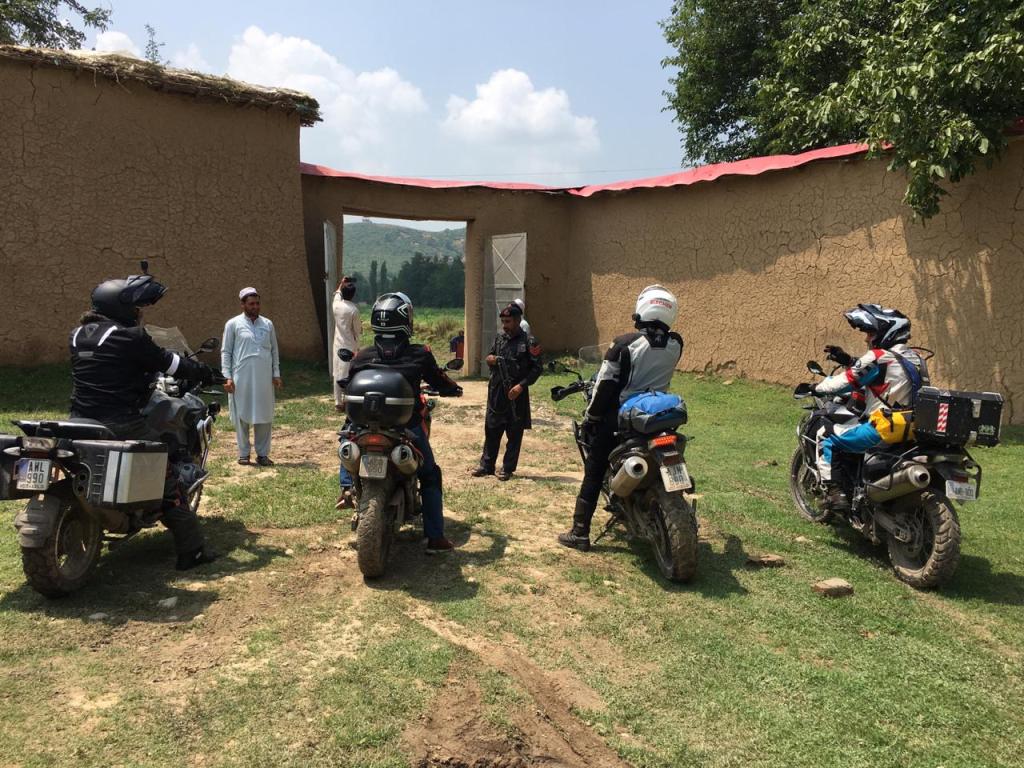
    Riding out to Tirah over the weekend before Eid-ul-Azha, reminded me about all what is right and wrong about Pakistan.

    Tirah valley stretches through Khyber, Kurram and Orakzai Agency, in our beloved Khyber Pakhtunkhwa province. While deciding this to be a destination for a weekend adventure ride from Islamabad our aim was simple—get back on the road and discover a part of Pakistan which by all research and intel was breathtakingly beautiful and not spoiled by tourism, yet. Hidden in that was a subliminal desire about looking at how people of the area are rebuilding lives after the insurgents have left. Returning people and returning lives are stories best read with one’s own eyes.

    Yes, Tirah Valley is beautiful! Yes, the people are busy rebuilding lives. Yes, security, or a modicum of it has returned. Yes, the army and the local lashkars have done a great job in clearing out the insurgents. Has normalcy or a semblance of it returned? No.

    Look below the veneer and you see three things knowing at the roots of life and peace and prosperity returning. Corruption, pulpits, and injustice. The same three things eating the roots of Pakistan.

    The roads that lead you there are littered with corruption. Corrupt institutions in cahoots with more corrupt institutions being manipulated by even more corrupt people. It is not the heady scent of a bumper Marijuana crop that exalts your senses rather the stench of rotting human souls which makes you wonder how the denizens breath and carry on normal lives. That, Pakistan cannot even ensure proper road to its citizens a few hours from its capital and cannot smell this stench is telling evidence of a failed state and its derelict and dysfunctional institutions.

    Scattered aplenty amongst this stench and poverty are gleaming mosques—each outdoing the other’s splendor. There seems to be race to adopt bespoke personal interpretations of religion and gather the largest flock. Easy to do, given the absence of education—the sheep! Dig deeper and you find that there is no Pakistani narrative, only that of the local pulpit. The pulpit that pits its followers against the neighboring pulpit. Pakistan, the land of the pure and the nation formed in the name of Islam has no writ on these pulpits. Yes, these pulpits are multiplying, and their mosques are gleaming just like fool’s gold, built with monies that add to the stench in the name of salvation hereafter. Life is a living hell.

    The people trying to rebuild their lives are sincere and the youth still have the heady euphoria of a victory recently past. They struggle to find a narrative and even more to find justice which protects their dreams and their yearn for their land. The corrupt road builder is in cahoots with the corrupt policeman who present corrupted facts to the corrupt judge who takes bribes from the youth while the local imam bows to all the corrupt gods and chastises the youth—for their desire to be alive! The people live in hell. The hell of insecurity and injustice. Where is the government, they ask? Check post after check post after check post after check post—of corruption, of pulpits, of injustice.

    They wake up one day and fight with the local army check post, being sold the night before to the only unifying narrative—that of the injustice that Pakistan has done to their lives. You know the rest, and so does Pakistan.