Tag: #Pakistan

  • Central Asia and Pakistani Seaports: Opportunities

    Central Asia and Pakistani Seaports: Opportunities

    Amer Zafar Durrani, July 27, 2005

    Executive summary

    Pakistan’s seaports – chiefly Karachi Port (KPT) and Port Qasim (PQA) – are the natural maritime gateways for Afghanistan and the five land‑locked Central Asian Republics (CARs). Over the past three fiscal years (FY 2021‑22 → FY 2024‑25) the value and tonnage of transit and trans‑shipment traffic have been volatile, mirroring regional security conditions, Pakistan’s anti‑smuggling crackdown and the global freight cycle. Karachi still has ample spare capacity (2–3 M TEU of headroom) and its tariffs remain regionally competitive, which positions it to capture a larger share of Eurasian north‑south flows once rail‑road links beyond Afghanistan become reliable.

    Transit and trans‑shipment volumes (last three years)

    DestinationFY2021‑22*FY2022‑23FY2023‑24**TrendNotes
    Afghanistan (under APTTA)US $ 4.02 bnUS $ 6.71 bn ― +67 %US $ 2.89 bn ― ‑59 %Sharp reversal after Sept‑23 border & foreign‑exchange restrictionsValue of goods manifested for Kabul, not duties‑paid imports.
    All CARs (aggregate)~ US $ 220 mUS $ 250 m†US $ 181 m (Jul‑Dec 24)Gradual growth, then 17 % slide in 1H FY25Traffic split 55 % Uzbekistan, 20 % Kazakhstan, 13 % Tajikistan, balance TK and KG.

    *No single government source disaggregates CAR transit; the FY2021‑22 estimate uses PBS country‑wise export data plus adjustment for re‑exports.

    **Pakistans fiscal year (1Jul30Jun). FY2024‑25 figures are year‑to‑date.

    ***Back‑cast from nine‑month Kazakhstan figure of US$72.4m with proportional scaling to other CARs.

    Derived from Pakistani Ministry of Commerce monthly trade statements and TDAP briefings.

    Key take‑aways

    • Afghanistan still dominates Pakistan’s transit business, but the clamp‑down on smuggling cut volumes by half in FY 24.
    • Central Asian volumes are small but resilient; rail‑cum‑road pilot consignments (PAKAFUZ and TIR sealed trucks) moved 1,350 TEU in 2024, up from 420 TEU in 2022 (News Central Asia, IPRI).
    • Once the Termez–Mazar‑i‑Sharif–Torkham railway is finished (target 2027) freight could jump to 4–5 Mt p.a., according to Uzbekistan–Pakistan feasibility papers.

    Potential of Karachi as a Central Asian gateway

    IndicatorLatest figureCapacity after committed upgrades
    Container throughput (FY 2024‑25)2.65 M TEU> 5 M TEU once SAPT & KGTL phases 2–3 are online (2027)
    Bulk and general cargo54 Mt handled FY 2024‑25Quay‑wall extensions add 25 Mt under AD Ports 25‑yr concession
    Rail connectivityDaily 40‑wagon block train to Peshawar; pilot rail service to ChamanPlanned ML‑1 double‑tracking will cut Karachi‑Peshawar transit from 50 h to 28 h (financing secured 2024)
    Road corridorsN‑5, M‑1/2 motorways & CPEC Western Route; 45‑hr truck transit Karachi‑Torkham, 40 hr to -ChamanPeshawar–Kabul–Termez (PAKAFUZ) railway + TIR trucks expected to slash Karachi–Tashkent to 7 days door‑to‑door

    Assessment

    At current berth occupancy (≈ 55 %) Karachi could treble CAR throughput without new quays. Hardware is no longer the bottleneck; soft‑infrastructure (single‑window clearance, bonded trucking guarantees, and political stability in Afghanistan) will determine utilization.

    Port charges applicable to transit / trans‑shipment

    Charge type (Karachi and PortQasim)Typical rate (May2024 tariff)Concession/relief for transit cargo
    Container landing/handling (20’/40’) – general cargoPKR 26,050 / 36,720 (≈ US$ 93 / 131) at QICTSame as domestic import; no surcharge.
    ATT / AID Afghan container (20’/40’)PKR 13,600 / 20,800 (≈ US$ 49 / 75) – 48 % rebate vs ordinary boxesPlus 10 days demurrage‑free window.
    Port dues – foreign vesselUS$ 0.39 /GRT (KPT) after July 2024 fuel‑linked revisionNo rebate.
    Wharfage – bulk (grain/fertilizer)PKR 80–110 / t (KPT schedule)25 % refund if consignment is bonded for reexport within 30 days.
    Storage/demurrage after free time20’ box : PKR 2,400 per day first 5 days (≈ US$ 8.6)Same, but Afghan transit allowed 10 days free.

    Assessment

    Compared with Bandar Abbas and Jebel Ali, Karachi’s container handling cost for transit boxes is 18–25 % lower, offsetting slightly longer trucking distances to Central Asia.

    Could Pakistan allocate port land to Kyrgyzstan (as Iran did at Bandar Abbas)?

    • Legal mechanism – The Karachi Port Trust Act (Section 12‑B) and the 2021 Public-Private Partnership Ordinance allow long‑term concessions or exclusive zones to foreign governments / SOEs with Federal Cabinet approval. Recent precedents include the 25‑ and 50‑year concessions signed with AD Ports Group and CK Hutchison.
    • Available sites – East‑Wharf berths 18‑20 and parts of the back-up yard vacated after SAPT phase 1 are earmarked for third‑party logistics parks in the port master plan (2023). Approximately 20 ha could be fenced as a Kyrgyz bonded logistics enclave without impeding port expansion.
    • Diplomatic context – Islamabad–Bishkek Inter-Governmental Commission (Nov 2023) included a Kyrgyz request for “dedicated terminal space” but talks are at concept stage.
    • Feasibility – Technically straightforward; politically acceptable if structured as a commercial lease (avoiding sovereignty sensitivities). Unlike Iran’s freehold grant at Bandar Abbas, Pakistan would follow the “design‑build‑operate‑transfer” template now standard at KPT. Customs rulings already recognize “export processing zone” status, so Kyrgyz freight could enter duty-free and move inland under the TIR carnets.

    Conclusion

    Pakistan can replicate Bandar Abbas‑style access for Kyrgyzstan; success hinges on traffic guarantees (minimum 0.2 Mt p.a. is the break‑even volume KPT quotes) and harmonizing quarantine/security procedures.

    Major logistics providers serving the Pakistan–Central Asia corridor

    This list is based on desk research only and should be verified if required.

    CompanyCore service on CAR lane
    National Logistics Corporation (NLC) – Pakistan Army‑backed multimodal fleet of 5,000 trucks; pioneer of TIR runs from Kashgar to Kabul and KarachiHQ near Mai Kolachi, bonded yards at West‑Wharf
    Spinzer Logistics & Shipping Line – End‑to‑end forwarding, Afghan border clearance, PAKAFUZ pilot consignmentsKeamari (M‑1 Zahra Mall)
    CEVA Logistics Pakistan – Global 3PL; JV with local partner; runs weekly Kashgar‑Karachi TIR convoyRepresentation office, Port Qasim
    DB Schenker Pakistan – Rail‑road sea‑air products for CIS; leverages Istanbul‑Almaty block train and Karachi feederClifton
    Agility Pakistan / DSV – 700‑person operation; warehousing in Karachi, Islamabad, Lahore; offers project cargo to Uzbekistan & KazakhstanKorangi
    Hutchison Ports Pakistan (SAPT) – Operates Karachi deep‑water terminal; provides through‑billing to Central Asia via PAK‑Uzbekistan rail corridorSAPT berth 3‑6
    Karachi Gateway Terminal Ltd (KGTL) – New AD Ports/Kaheel JV; multipurpose quay with Central‑Asia logistics deskEast‑Wharf berths 6‑10
    TCS Logistics & Express – Dedicated B2B road & air freight; has flown charter freighters Karachi‑Tashkent for electronics shipments
    Tristar Transport (Agility affiliate) – Bulk liquids trucking Karachi‑Spin Boldak‑Termez; ISO‑tank depot inside Port Qasim free zone.
    SEATIME Container Line / GreenPak Shipping – NVOCC with regular SOC box repositioning for CAR clients

    Note: This article-report was prepared July 2025. All monetary figures in current US dollars unless noted.

    References

    A. Afghan transit‑trade statistics and trends

    1. “Afghan Transit Trade falls 84 pc amid anti‑smuggling efforts” – The Nation, 23 Sep 2024. (The Nation)
    2. “Pak‑Afghan Transit Trade Plunges by 59 % in FY‑24” – ProPakistani, 27 Aug 2024. (ProPakistani)
    3. “Pakistan’s Smuggling Squeeze” – Daily Times (op‑ed citing FBR data), 12 Jan 2024. (Daily Times)
    4. “Navigating the Impacts of Afghan Transit Trade on Pakistan’s Economy” – PEconomist, 15 Feb 2024. (Peconomist)

    B. Central‑Asian transit flows & trade

    1. “Pakistan’s exports to Central Asia drop 17 % despite transit trade agreements” – Profit by Pakistan Today, 6 Feb 2025. (Profit by Pakistan Today)
    2. Policy Brief: “Central Asian Trade, QTTA and the TIR Convention” – Islamabad Policy Research Institute, Nov 2024. (IPRI)

    C. Karachi Port capacity & performance

    1. “Karachi Port reports 23.43 % cargo‑handling surge in FY‑24” – PK Revenue, 9 Jul 2024. (Pkrevenue.com)
    2. KPT Tonnage & TEU Dashboard (interactive data portal) – Karachi Port Trust, accessed 27 Jul 2025. (KPT)

    D. Port charges & tariffs

    1. QICT General Cargo Tariff – effective 1 Apr 2024 (official PDF, 3 pp). (DP World)
    2. Statutory Notification SRO 522(I)/2023 – Revised KPT Port Dues (extract shows US$ 0.392 / GRT). (KPT)
    3. “KPT raises port charges after two decades” – Dawn, 5 Jul 2023. (Dawn)

    E. Concessions, master‑plan sites & expansion projects

    1. “AD Ports to deepen the Karachi Gateway Terminal” – Dredging Today, 22 Jun 2023. (Dredging Today)
    2. AD Ports Group press release: 50‑year concession for KGTL berths 6‑10 – 22 Jun 2023. (Adports Group)
    3. “AD Ports & Kaheel secure second Karachi concession (berths 11‑17)” – The Maritime Standard, 3 Feb 2024. (The Maritime Standard)
    4. MoU: AD Ports Group & Pakistan BOI on East‑Wharf industrial zone – 28 Feb 2025. (Adports Group)

    F. Inland‑connectivity projects

    1. Briefing Paper 05: “CPEC & ML‑1 Railway Project” – Pakistan Institute for Parliamentary Studies, Sep 2024. (PIPS)
    2. “Pakistan, China to finance ML‑1 in phases” – ProPakistani, 23 Oct 2024. (ProPakistani)
    3. “Trans‑Afghan railway expected to be completed by end‑2027” – Ariana News, 4 May 2024. (Ariana News)
    4. “Uzbekistan’s deputy minister announces Trans‑Afghan railway timeline” – Daryo.uz, 11 May 2024. (Daryo.uz)
    5. “Trans‑Afghan peace‑train pact puts trade over turmoil” – Asia Times, 22 Jul 2025. (Asia Times)

    G. Comparative precedent at Bandar‑Abbas

    1. “Iran to give Kyrgyzstan logistics site in Bandar Abbas Port” – Business Turkmenistan, 16 Dec 2021. (Business Turkmenistan Information Center)
    2. “Iran ready to host neighbours’ independent port authorities in Bandar Abbas” – Iran Daily, 4 May 2025. (Iran Daily)

    H. Kyrgyz‑Pak Inter‑Governmental Commission (IGC)

    1. Government of Pakistan press release: 4th Kyrgyz‑Pakistan IGC (Bishkek, 10 Nov 2023) – Economic Affairs Division. (Education And Development)
    2. “Pakistan, Kyrgyzstan underline need to strengthen bilateral cooperation” – DND News, 14 Nov 2023. (Dispatch news Desk)
  • Future Afghanistan economy? Taking clues from the economy of the ‘Taliban Group’

    Future Afghanistan economy? Taking clues from the economy of the ‘Taliban Group’

    The author, third from left at Afghanistan side of Towrkham, sometime post 9/11, with his guards, provided by the then Afghanistan National Army

    Amer Zafar Durrani with Tehseen Ahmed Qureshi and Hudda Najeeb Luni

    Islamabad, September 8, 2021

    The debate on how Afghanistan’s economy will fare, once the coalition forces, and their proxies and supporting service providers, have left, rages on. These forces are now almost gone. Taliban have announced their interim government structure after reasserting their control over what we know as Afghanistan.

    From an economic point of view, much has changed and yet much stays the same. Falsely propped-up consumption is fast going down. The prevalence of abject poverty in the masses stays the same. If anything, it is worsening by the day!

    What will be the shape of the economy going forward? A question that is linked very much to the structure and ‘spirit’ of the ‘Taliban Group’ governance going forward. Will the re-assertive 21st century Taliban dominated government follow the neo-colonial models, or, like Iran and China decide to beat a different drum?

    Leading all this preface is the still an unanswered question. When we talk of a country, a nation-state, do we talk of its people or its government? Naïve? Yes, and no. Is the comity of nations now an enemy of Afghanistan or a friend of Afghanistan? Why should assistance be stopped to Afghanistan due to a change of government given that primarily it is the people that suffer? These can be explored at another time. Important, though, to keep these in mind as one mulls the present primary topic.

    The author photographing an Antonov being unloaded at Kabul airport while he waits impatiently, midair, to land

    Afghanistan faces an economic collapse resulting from a sudden stop of foreign inflows, with a last measured[1] trade deficit at 25 percent of GDP in June 2021. Its foreign reserves, of USD 9 billion or so, have reportedly been frozen—by, you guessed it, their best friends till recent years, USA. There is no other, immediately visible, credit line.[2]. In the absence of foreign money, the only way left for the economy to balance the deficit is to contract. GDP shrinks, so demand falls, so imports decline. Exchange rate devalues a lot too, to cut imports.

    Unlike what is being hyped in media, this is not altogether sudden—as, not all was rosy pre-August 15, 2021. The Afghan economy stopped growing post-2012 after foreign aid started to decline from a high of about 50 percent of GDP. ‘Development’ was not being, as it cannot be, imported. Afghans living below poverty were increasing from 34 percent to more than half of the resident population[3]. The large injection of foreign money did not translate into sustainable growth.

    ‘Foreign’ money boosted temporary consumer spending but did not increase the domestic productivity. Imports, and exports, more than tripled. From USD 2.5 billion to USD 8.9 billion in 9 years—2003 through 2012—from USD 100 million to USD 390 million. Despite the increase, exports underperformed despite this tripling leaving the wide trade deficit mentioned earlier[4]. The exports were hurt by the real exchange rate appreciation—a result of the internal spending boom. Domestic revenue mobilization was also artificially buoyed due to this temporarily enhanced economy.

    The author, sometime post 9/11, inspecting Customs documents at Islamqala, Afghanistan, for trade coming in from Iran

    Not all of Afghanistan’s revenue—about USD 5.3 billion in 2021—was directly ‘imported’. Domestic revenue mobilization until 2021 was about half of the total government budget. Like any other dysfunctional government in its neighborhood, much of this ‘domestic’ revenue was collected at the border—direct border tariffs and presumptive business taxes. This, also, was declining in recent years. Primarily due to reduced imports and with lessening foreign footprint and thereby the overall consumption through imports.

    Afghanistan’s total budgetary outlay for FY21 was roughly USD 6 billion—30 percent of its GDP. Operation expenditures accounted for nearly USD 3.8 billion or 65 percent of the budget. With a domestic revenue collection amounting to around a third of the overall budgetary outlay and adding the external grants—also counted as revenue—the budget was short by almost USD 0.5 billion. IMF was to cover half of this.

    Afghanistan became a member of IMF fund in 1985, since then eleven arrangements were made between the two. The country’s “Outstanding Purchases and Loans” stood at nearly SDR[5] 0.4 billion in June of 2021[6]. Interestingly, IMF pledged its largest ever allocation of SDR to Afghanistan—USD 0.4 billion—which was to be effective in August of 2021. This has now obviously been put on hold or ‘seized’.[7] Was the IMF, read US Government lackey, per global narrative, not aware of the ground realities, or was it giving a false sense of security to the US installed government of Ashraf Ghani? Will we ever know?

    A major casualty of this upcoming budgetary contraction will be internal security and governance in Afghanistan—vide the inability to support the relevant institutions. Defense and internal security and justice accounted for almost 40 percent of the overall budgetary outlays. Couple this with economic affairs, we are looking at more than two thirds of the required budget to manage peace and stability in Afghanistan. Grants[8] and IMF financed this spending, hitherto. Where will this money come from now? More factors complicate the answers further. The opium economy of Afghanistan and the economy of the ‘Taliban Group’.

    Afghanistan being a quasi-narco-state is not, and has not been, a myth since last 3 decades. Afghanistan produces a major share of the world’s opium with a record of almost 10,000 tons set in 2017. Farmgate prices’ returns, direct money going to growers, was estimated at USD 1.4 billion—7 percent of Afghanistan’s GDP. Taliban, the 19th century version, banned poppy growing in 2000 with a view to acquiesce international legitimacy—popular backlash from Afghan growers and less than expected international reception led them to change their stance.

    Things, as mentioned earlier, have been on a steady decline, leading to August 15th. Three of the last four years have seen some of Afghanistan’s highest levels of opium production. Even as the COVID-19 pandemic raged, poppy cultivation soared, according to UNODC, 37 percent in 2020. UNODC also reported that the Taliban, the 21st century version, likely earned more than USD 0.4 billion in FY19 from the drug trade.

    So, the ‘Taliban Group’, if one can call it in corporate terms, has been running a state within a state. Call it the Taliban Group economy. This group has been running defense and civil expenditures. Consider, therefore, that they now need to adjust their budget to incorporate the wider state they have now charged themselves with. In some ways, they handled the defense part of this budgetary outlay far more efficiently than the Ghani government! There is hope in this. Instead of questioning the ability of this group to manage the Afghanistan economy, providing doomsday scenarios, speculating on how they should follow the neo-colonial diktat, maybe they should be given an update on what they are now taking charge of.

    Afghanistan’s economy is now a classic nexus of fragility and disasters, beyond simply an overt aid-dependency. Private sector, the key driver of growth, is almost non-existent—the formal side of it, at least, though some would argue that Afghanistan is entirely running on private largesse. Security and political instability are the major hindrance to private sector growth. Private sector development and diversification is constrained by insecurity, political instability. Institutions are weak, infrastructure is inadequate, corruption is widespread, property rights are ambiguous! Majority of the labor force is concentrated in low-productivity agriculture—44 percent of the total workforce works in agriculture and 60 percent of households derive some income from agriculture (can be read poppy by some). Afghanistan has weak. In other words, a textbook failed state as neo-colonials would put it.

    Displaced Afghan nationals compound the situation. Afghanistan has the third-largest displaced population in the world. Since 2012, some five million people have fled and not been able to return home, either displaced within Afghanistan or taking refuge in neighboring countries. Add this to a high birth rate, we have a young unemployed population looking towards the new government—more than quarter, or maybe even more, of Afghans present, were born after 9/11. With internal receipts dwindling and external aid—at least on surface—drying up some external financing will be sought by the Taliban Group—directly or indirectly. Here is where the most possible clash of ideas looks likely. The global financial architecture is not Sharia[9] compliant.

    Islamic finance, Sharia compliant, has two crucial parts, banking services and the Sukuk market—the Islamic equivalent of the bond market. Together they equate for around 95 percent of the documented USD 1,800 billion worth of Islamic finance assets.[10] Taliban like Iran, or even in fact China, will opt for integration into this system.

    Here again, there is hope, as currently there are more than 200 Islamic financial institutions around the world with investment funds in excess of USD 250 billion and growing at 16 percent annually, offer a possible solution.[11]

    In summary, there is hope as long as the Taliban Group recognize that the state is its people and the welfare of its people is what legitimizes the existence of the state, not integration into neo-colonial systems, alone. In ensuing dialogues, we should talk in detail about role of neighbors, especially Pakistan, and the likelihood of the Taliban Group showing the tenacity and perseverance in staying away from the neo-colonial legacies and striving to better the lives of Afghans beyond their current narrow interpretation of what betterment of lives entails!


    This article by the author was originally written for the Global Village Space, September 2021, edition, and this is the unedited submission.


    [1] World Bank. (2021). World Development Indicators, available at https://databank.worldbank.org/reports.aspx?source=2&country=AFG

    [2] Bloomberg (2021). US Freezes Nearly $9.5 Billion Afghanistan Central Bank Assets, available at https://www.bloomberg.com/news/articles/2021-08-17/u-s-freezes-nearly-9-5-billion-afghanistan-central-bank-assets

    [3] Ibid

    [4] World Bank. (2021). World Development Indicators, available at https://databank.worldbank.org/reports.aspx?source=2&country=AFG

    [5] What is an SDR, exactly? SDR is an international reserve asset created by the IMF from a basket of currencies including the US dollar, Japanese yen, Chinese yuan, the euro and the British pound. While not an official currency itself, the SDR is like an artificial currency that IMF member states can exchange for freely usable hard currencies like US dollars. Countries can exchange their SDRs for those freely usable currencies at a fixed exchange rate, which changes daily and is posted on the IMF’s website.

    [6] https://www.imf.org/en/Countries/AFG#

    [7] https://www.aljazeera.com/economy/2021/8/19/what-will-happen-to-afghanistans-economy-under-taliban-rule

    [8] The Afghanistan Reconstruction Trust Fund (ARTF): This is a multi-donor trust fund that helps coordinate international aid to improve the lives of Afghan people, this fund is administered by The World Bank on behalf of donor partners. The fund includes 34 donors who have contributed to development and reconstruction in Afghanistan. Major Donor Partners include Germany, US-USAID, UK-FCDO, Sweden, Canada, EU-EC, Netherlands, Norway, Italy, Finland, Austria Denmark, Japan, Czech Republic, Switzerland, Estonia, Ireland, Poland, and Republic of Korea. ARTF is the largest single source of funding for Afghanistan’s development expenditures, including 30 percent of Afghanistan’s civilian budget, as well as it supports core government functions.

    [9] According to IMF’s definition “The provision of financial services that are compliant with Sharia law. Sharia does not allow the payment or receipt of interest (riba), gambling (maysir) or excessive uncertainty (gharar). In practice, this means that common investing techniques such as short selling (betting against a security) are banned and all transactions must demonstrate a real economic purpose.”

    [10] https://www.weforum.org/agenda/2015/07/top-9-countries-islamic-finance/

    [11] https://www.sbp.org.pk/departments/ibd/lecture_8_related_reading_1.pdf

  • Pakistan Motorcycle Stories – Speed-brakers, Pulpit, and Pakistan’s Writ!

    August 4, 2020

    From Sultanzai in Tirah to Peshawar, KP, 2020

    The speed breaker, also known as the speed bump, was invented in 1950 by Arthur Holly Compton when he noticed that drivers frequently sped past Washington University (https://www.acplm.net/5-things-didnt-know-speed-bumps/). I think, the man should have kept to what he knew best, his discoveries in electromagnetic theory, for which he received the Nobel Prize. Just as IK should have stuck to cricket and left Prime Ministering for someone else in the party—aka Sonia Gandhi model.

    We, today, in Pakistan have the damn speed breakers flagrantly challenging the writ of the government and reinforcing the writ of the pulpit in this land of the pure (https://empowerpakistanbyazd.blog/2020/08/02/pakistan-motorcycle-stories-corruption-pulpits-and-injustice/).

    What, you might ask, is the problem. Slowing down the free and pure and aplenty should be considered a national service. Keeping them tamed and unable to get to where they are going without dying of speed and haste and killing a few locals on the way should be a good deed in the eyes of the state and citizens and of course God.

    Well, let me be clear, that is not happening for the those who can achieve those speeds on our roads, the rich and the public and goods transport drivers do not really stop for them. They fly over them. One testing their expensive SUVs and the other because they do not give a damn in the haze of whatever mental stimulant—read “hash”, they find to keep them awake and insane while making ends meet.

    What the speed breakers are doing is either killing or slowing down common folks like us. Killing for they are never marked with a road sign and slowing for we either think about the repair bill of our motor vehicles or are beset with guilt at the plea of the pulpit. Here the challenge by the pulpit comes in.

    It is not that I am the only one complaining about the speed breaker after speed breaker after speed breaker. Just ask Google Aunty and she will tell you about the plethora who are like wise not bemused! Read story after story pleading the authorities to do something about it and you will find a common thread. The authorities either justify the need to slow down the denizens or accept the flaw and commit to removing them or simply ignore the request. The last one is often the case of pulpit.

    Just like we celebrate outlaws who shoot people in court we seem to have a soft corner for every pulpit that decides to block the road and have innocent children and elderly and challenged folks begging the screeching and halting vehicles for monies. Monies to sponsor more pulpits, grander pulpits, and pulpits that fan the rot in our Pakistan. The state, Pakistan, seems to again be impotent against these false claimants of our beautiful Islam and Pakistan. Love it or hate it, admit it and ride on, Pakistan!

    On the way from Booni to Mastuj, Chitral, 2019
  • Pakistan Motorcycle Stories – Corruption, Pulpits, and Injustice!

    Jul 24, 2020

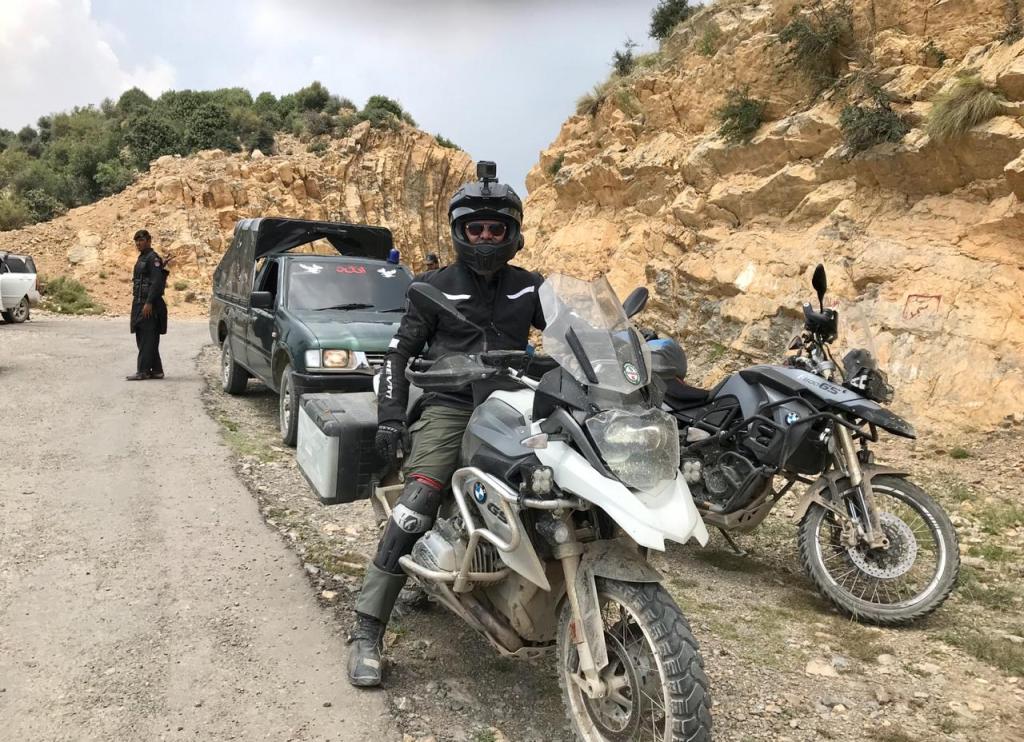
    Riding out to Tirah over the weekend before Eid-ul-Azha, reminded me about all what is right and wrong about Pakistan.

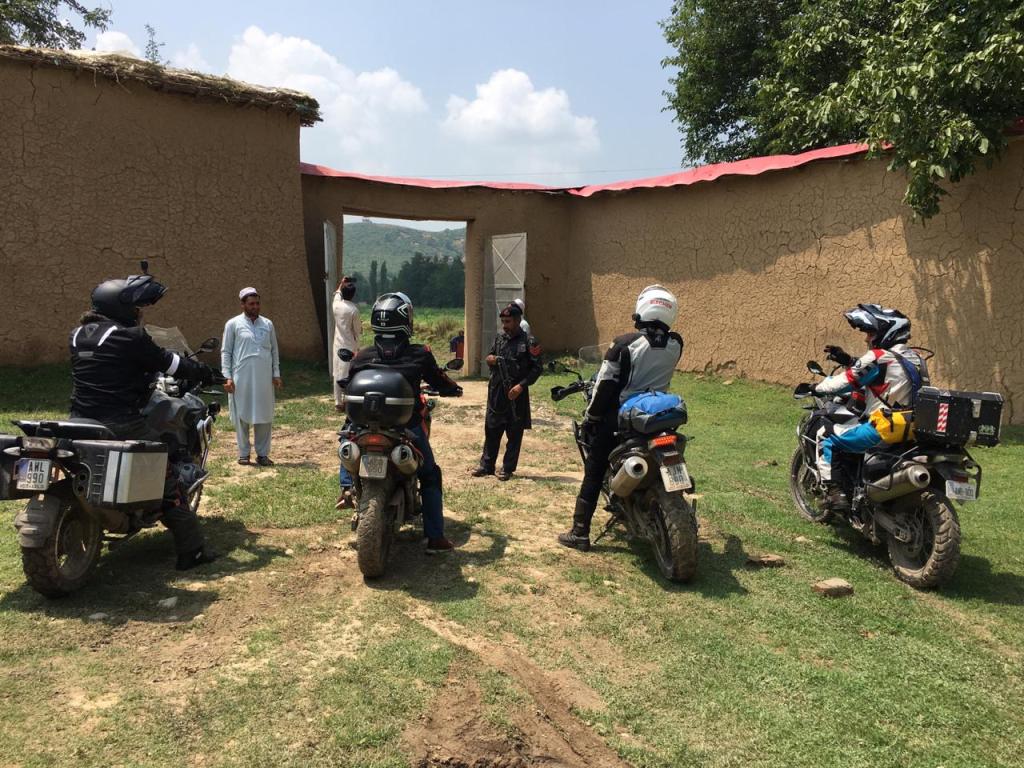
    Tirah valley stretches through Khyber, Kurram and Orakzai Agency, in our beloved Khyber Pakhtunkhwa province. While deciding this to be a destination for a weekend adventure ride from Islamabad our aim was simple—get back on the road and discover a part of Pakistan which by all research and intel was breathtakingly beautiful and not spoiled by tourism, yet. Hidden in that was a subliminal desire about looking at how people of the area are rebuilding lives after the insurgents have left. Returning people and returning lives are stories best read with one’s own eyes.

    Yes, Tirah Valley is beautiful! Yes, the people are busy rebuilding lives. Yes, security, or a modicum of it has returned. Yes, the army and the local lashkars have done a great job in clearing out the insurgents. Has normalcy or a semblance of it returned? No.

    Look below the veneer and you see three things knowing at the roots of life and peace and prosperity returning. Corruption, pulpits, and injustice. The same three things eating the roots of Pakistan.

    The roads that lead you there are littered with corruption. Corrupt institutions in cahoots with more corrupt institutions being manipulated by even more corrupt people. It is not the heady scent of a bumper Marijuana crop that exalts your senses rather the stench of rotting human souls which makes you wonder how the denizens breath and carry on normal lives. That, Pakistan cannot even ensure proper road to its citizens a few hours from its capital and cannot smell this stench is telling evidence of a failed state and its derelict and dysfunctional institutions.

    Scattered aplenty amongst this stench and poverty are gleaming mosques—each outdoing the other’s splendor. There seems to be race to adopt bespoke personal interpretations of religion and gather the largest flock. Easy to do, given the absence of education—the sheep! Dig deeper and you find that there is no Pakistani narrative, only that of the local pulpit. The pulpit that pits its followers against the neighboring pulpit. Pakistan, the land of the pure and the nation formed in the name of Islam has no writ on these pulpits. Yes, these pulpits are multiplying, and their mosques are gleaming just like fool’s gold, built with monies that add to the stench in the name of salvation hereafter. Life is a living hell.

    The people trying to rebuild their lives are sincere and the youth still have the heady euphoria of a victory recently past. They struggle to find a narrative and even more to find justice which protects their dreams and their yearn for their land. The corrupt road builder is in cahoots with the corrupt policeman who present corrupted facts to the corrupt judge who takes bribes from the youth while the local imam bows to all the corrupt gods and chastises the youth—for their desire to be alive! The people live in hell. The hell of insecurity and injustice. Where is the government, they ask? Check post after check post after check post after check post—of corruption, of pulpits, of injustice.

    They wake up one day and fight with the local army check post, being sold the night before to the only unifying narrative—that of the injustice that Pakistan has done to their lives. You know the rest, and so does Pakistan.